COPD Emergency Plan for a Parent on Home Oxygen: Zones and Rules
By the Emergency Binder Now team · Updated · 12 min read
In this guide
- The COPD action plan: green, yellow, red
- Flare-up signs, and doctor versus 911
- What to write down for paramedics
- Home oxygen fire safety
- Backup cylinders and storage
- Tell the fire department, the utilities and the neighbors
- Traveling with oxygen
- Frequently asked questions
- Putting the plan where people will find it
A COPD emergency plan for a parent on home oxygen has two halves. The first is a written action plan, filled out with their doctor, that sorts symptoms into green (a normal day), yellow (a flare-up: follow the plan and call the doctor if it doesn't improve) and red (call 911). The second is the oxygen side: the prescribed flow rate, the supplier's 24-hour number, a backup tank, and a few fire rules everyone in the house follows, starting with no smoking and no open flames.
If the oxygen comes from a concentrator, our power outage plan for medical equipment covers batteries, tank runtimes and generators, so this guide skips them.
The COPD action plan: green, yellow, red
The American Lung Association publishes a free COPD Action and Management Plan, a worksheet your parent fills out with their doctor listing their medicines, doses and what to do depending on how they feel. The ALA's printable plan says to discuss it at each visit and update it as needed. Its three zones:
| Zone | What it looks like | What the plan says to do |
|---|---|---|
| Green: doing well | Usual activity, usual cough and mucus, sleeping well, good appetite | Daily medicines, oxygen as prescribed, keep exercising, avoid smoke and irritants |
| Yellow: a bad day or flare | More breathless, less energy, more or thicker mucus, using the quick relief inhaler more, more ankle swelling, poor sleep, medicine not helping | Keep daily medicines, quick relief inhaler as written, start any steroid or antibiotic the doctor listed, oxygen as prescribed, rest, pursed lip breathing. Call the provider if symptoms don't improve |
| Red: urgent care | Severe shortness of breath even at rest, can't do any activity or sleep because of breathing, fever or shaking chills, confused or very drowsy, chest pain, coughing up blood | Call 911 or get medical care immediately |
The ALA's web page adds blue or gray lips, fingertips or nails and a racing heart to the red zone.
The yellow zone has blanks for the doctor to "specify name, dose, and duration" of a steroid or antibiotic to start during a flare. If those get filled in, ask two more questions and write the answers on the form: is that prescription already in the house, and should your parent call before starting it? When they do start it, write the date. Somebody will ask "when did this start?", and nobody remembers on day four.
The form also has an "Oxygen" box with three blanks: resting, increased activity and sleeping. Copy those from the actual prescription, not from memory.
Flare-up signs, and doctor versus 911
MedlinePlus defines a COPD flare-up as increased symptoms that last 2 days or more and are more intense than usual. Early signs include trouble catching their breath, wheezing, and more mucus or a change in its color. Colds and lung infections, smoke, weather changes, overdoing it and stress can all set one off.
The NHLBI's COPD Caregiver's Toolkit draws the line between the two calls:
- Call the doctor for an ongoing or worse cough, a cough with a lot of mucus, more shortness of breath, wheezing, chest tightness, or cold or flu symptoms.
- Call 911 if it's unusually hard to walk or talk (trouble finishing a sentence), the heartbeat is very fast or irregular, lips or fingernails are gray or blue, or breathing is fast and hard even after their COPD medicine.
MedlinePlus adds: if symptoms don't get better within 48 hours or keep getting worse, contact the provider or go to the hospital. The NHLBI's before a flare-up checklist asks caregivers to settle with the doctor which symptoms mean a call to the office and when to call 911. Write the answers on the plan in your parent's words. "Can't get to the bathroom without stopping" is easier to spot at 2 a.m. than "dyspnea on exertion."
Check the tubing first
MedlinePlus's guide to using oxygen at home has a step worth taping to the concentrator. If your parent has more headaches, drowsiness, confusion, blue lips or hard breathing, check the equipment first: no leaking connections, and oxygen actually flowing. If it's working, contact their provider. A tube kinked under a chair leg takes five seconds to fix.
Blue lips and hard breathing are also 911 signs, so in the red zone, call 911 first and check the tubing while you wait.
The rescue inhaler as an early warning
MedlinePlus calls quick-relief inhalers rescue medicines and gives a useful tripwire: using them more than 3 times a week, or more than one canister a month, probably means COPD isn't under control, and the provider should hear about it. If you help with refills, the pharmacy history can show this before your parent mentions it.
On the plan, write the rescue inhaler's name, how many puffs and how often during a flare (the ALA form has an "every ___ hours" blank), whether it goes with a spacer or nebulizer, and where the spare is kept.
What to write down for paramedics
When the crew walks in, your parent may not have the breath to talk. Our emergency information sheet for paramedics covers the full layout. For COPD and oxygen, make sure these lines are on it:
| What to record | Example (made up) | Why |
|---|---|---|
| Oxygen prescription | 2 liters per minute at rest, 3 with activity, 2 sleeping; continuous | The COPD Foundation says the prescription states when to use oxygen and the flow rate |
| Device | Home concentrator, plus portable on pulse setting 2; nasal cannula | Portable concentrator settings are not the same as a liter flow setting, per the COPD Foundation |
| Oxygen supplier | Name, 24-hour number, account number | Someone will need a tank, at the hospital or on the way home |
| Baseline oxygen level | Usually 90 to 92 percent at rest on 2 liters (Oct. 2026) | Lets the crew compare today with your parent's normal |
| Baseline breathing | Talks in full sentences; walks to the mailbox with one stop | Normal for COPD looks different from normal for a healthy 75-year-old |
| Oxygen sensitivity | Only if their doctor has said so, in the doctor's words | See below |
| COPD medicines | Daily inhalers, rescue inhaler, nebulizer, any steroid or antibiotic course with its start date | Recent courses are part of the story |
| Advance directive, POLST, health care proxy | "POLST on the fridge; proxy is daughter Lisa" | The NHLBI says you may need the POLST if paramedics come to the home |
| Lung doctor, last hospital stay | Name, phone, date and hospital | Helps the ER find records |
Everything in the example column is invented for illustration. Your parent's doctor sets the real numbers.
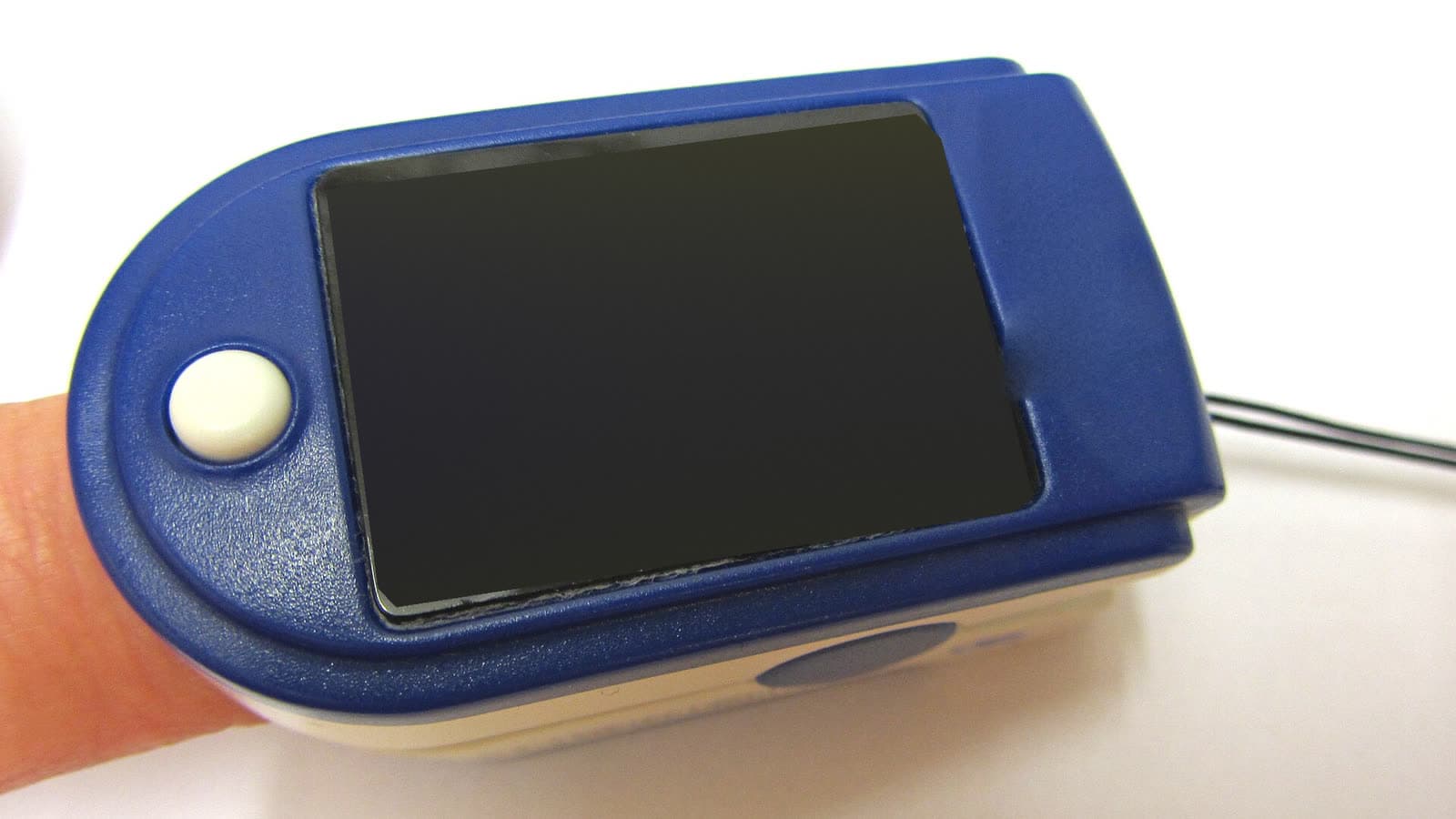
For the baseline reading, the FDA's pulse oximeter guidance says to use a warm, relaxed hand held below heart level, remove nail polish, wait for a steady number, and write it down with the date and time. It also says poor circulation, skin pigmentation, skin temperature and tobacco use can affect accuracy. So record a typical range from a few ordinary days, not one lucky reading.
Ask the doctor about oxygen sensitivity
More oxygen isn't always better. The American Thoracic Society's patient guide to oxygen therapy says to use oxygen as prescribed, and that for some patients too much can slow their breathing to dangerously low levels. Some people with COPD also don't clear carbon dioxide well. In England, hospitals such as Cambridge University Hospitals give those patients an oxygen alert card to show paramedics, so the crew watches their oxygen closely.
Ask your parent's lung doctor: "Is my parent sensitive to too much oxygen, and is there an oxygen level you want emergency crews to aim for?" If there is, copy it onto the sheet exactly. If not, leave the line off. The sheet is for the crew. It is never a reason to hold back prescribed oxygen or to wait on calling 911 when your parent is struggling to breathe.
The papers that travel with the plan
The NHLBI checklist says you and a backup caregiver should both have the emergency plan, a current medication list, insurance details and the location of the power of attorney. It also suggests talking with the doctor about a POLST form, which the toolkit says is meant for people with a serious illness, and keeping copies with the medication list. If your parent's medication list still lives on the back of an envelope, fix that first.
Home oxygen fire safety
Oxygen doesn't burn, but it makes everything else burn more readily. The ALA's oxygen safety guidelines call it "non-flammable; however, it supports combustion." The NFPA's medical oxygen safety tip sheet adds that oxygen saturates fabric-covered furniture, clothing, hair and bedding, making it easier for a fire to start and spread. The FDA says home care patients on oxygen are at increased fire risk, and that where oxygen is concentrated, fires started by electrical faults are more likely.
Smoking
NFPA says smoking materials are the leading heat source in medical oxygen fires, injuries and deaths, and that there is no safe way to smoke in the home when oxygen is in use. The ALA says don't let others smoke nearby either, which covers the visiting brother-in-law and the aide on a break. If your parent still smokes, tell the doctor; the ALA form has a section for a quit plan.
Flames, heat and the kitchen
- Distance. NFPA and the ALA say keep oxygen at least five feet from heat sources and open flames. MedlinePlus's oxygen safety page says 6 feet, the COPD Foundation says five to 10 feet, and Atrium Health Wake Forest Baptist's home oxygen safety tips, passing on U.S. Fire Administration advice, say 10 feet from where the oxygen comes out. Use the biggest number that works in the house, or the supplier's number if they give one.
- No open flames. NFPA lists candles, matches, wood stoves and even sparking toys as ignition sources that shouldn't be used in a home with oxygen. Birthday candles count.
- Gas stoves. The ALA says don't use oxygen while cooking with gas. MedlinePlus says keep it away from the stovetop and oven, watch for spattering grease, and that a microwave is usually OK.
- Small appliances. The ALA says no hair dryers, curling irons, heating pads or electric razors while wearing oxygen. MedlinePlus adds space heaters and electric blankets.
Get out a tape measure. "Five feet" in someone's head is often three. A strip of tape on the floor around the stove shows a helper where the line is.
Lotions, oils and sprays
The ALA says avoid petroleum jelly, vapor rubs and oil-based lotion and use water-based products instead, never oil the unit or handle it with greasy hands, and keep aerosols like air fresheners and hairspray away. Alcohol hand sanitizer is fine only if it's rubbed in and the hands are completely dry before touching the equipment. For dry lips and nose, MedlinePlus suggests aloe vera or a water-based lubricant.
Around the house
- "No Smoking" and "No Open Flames" signs inside and outside the home (NFPA and the ALA)
- Working smoke alarms, checked monthly (COPD Foundation), and a fire extinguisher nearby; more than one if your parent moves around with oxygen (MedlinePlus)
- Concentrator plugged straight into the wall, no extension cord, nothing else on that outlet, several inches from walls and curtains (ALA)
- Oxygen off when not in use, and the cannula never left running on the bed or a chair (ALA)
- Tubing no longer than 50 feet and out of walking paths (ALA)
- A fire escape plan with two ways out of every room; if a fire starts, turn off the oxygen, leave and call 911 (U.S. Fire Administration, via Wake Forest)
Our home safety checklist covers smoke alarms and heaters for the rest of the house.
Backup cylinders and storage
A concentrator needs electricity, so MedlinePlus says anyone using one must have a backup tank. The ALA says to watch the gauges and give the supplier plenty of time to deliver refills.
- Don't store oxygen in a trunk, box or small closet; under the bed is OK if air moves freely (MedlinePlus).
- Secure tanks to something fixed. The COPD Foundation warns a knocked-over tank's top could break off and the tank could become a missile.
- Don't try to fix broken equipment yourself (COPD Foundation). Call the supplier.
One patient quoted on the ALA's caregiver page puts it well: "Nothing is worse than trying to talk your caregiver through an explanation of how to change the regulator to a new tank while you are short of breath and needing it fast!" Have the supplier show whoever visits most how to switch to a tank and read the gauge, on an ordinary day.
Tell the fire department, the utilities and the neighbors
MedlinePlus says to tell the local fire department, electric company and phone company that oxygen is used in the home. The COPD Foundation says to tell the gas company too and ask for a priority service listing. MedlinePlus says they will try to restore power sooner if it goes out. That's a try, not a promise, so the backup tank still matters. For the fire department, call the non-emergency line and ask what, if anything, they do with the information.
MedlinePlus also says to tell family, neighbors and friends. The neighbor with a key should know where the tanks are and that nobody smokes on the porch.
Traveling with oxygen
From the ALA's traveling with oxygen advice:
- Flying. Compressed gas and liquid oxygen can't be used on the plane; an FAA-approved portable concentrator can. The FAA says accepted models must be listed in its rules or carry a label saying they meet its criteria, Tell the airline when you book (MedlinePlus says at least two weeks ahead), bring extra batteries, and arrange oxygen for layovers and the destination.
- Driving. Unit upright on the floor or seat, secured with a seat belt, windows cracked, no smoking, and never left in a hot car.
- Bus, train or cruise. Call buses and trains at least three days ahead; most cruise lines want four to six weeks' notice.
Pack the action plan and paramedic sheet in the travel bag. For trips that aren't optional, see our evacuation plan.
Frequently asked questions
Can my parent turn up their oxygen during a flare-up?
Not on their own. The ALA says never change the flow rate from what the doctor prescribed, and the ATS notes too much oxygen can be a problem for some patients. If the doctor wants a different flare setting, ask them to write it on the plan. If your parent is struggling to breathe, call 911.
When should someone with COPD call 911?
For any red zone sign, or the NHLBI's list: unusually hard to walk or talk, a very fast or irregular heartbeat, gray or blue lips or fingernails, or fast, hard breathing even after COPD medicine.
How far should oxygen be from a gas stove?
At least five feet per NFPA and the ALA, up to 10 feet in other guidance, and the ALA says not to use oxygen while cooking with gas at all.
Putting the plan where people will find it
Most of this is paperwork. You can pull it together yourself with this guide, one doctor's visit and a call to the supplier. Or Emergency Binder Now can organize it from about 25 minutes of guided questions into a printable binder with your parent's medicines, doctors and contacts, a one-page Emergency Information Sheet for paramedics and the ER, and a list of what's still missing. You can see a sample binder first.
This article is general information, not medical advice. Your parent's action plan, oxygen settings and target levels come from their doctor, and the oxygen supplier's instructions come first for their equipment.
This guide is general information to help families get organized. It isn't legal, medical or financial advice; for decisions about your parent, talk with their doctor, pharmacist or an attorney in their state.