Home Safety Checklist for an Elderly Parent: What Medicare Pays
By the Emergency Binder Now team · Updated · 12 min read
In this guide
- How to do the walkthrough
- Smoke and carbon monoxide alarms
- Bathroom: grab bars that actually hold
- The water heater: 120°F
- Stairs and steps
- Lighting and night lights
- Kitchen and fire safety
- Medicines and other things to lock up
- The front door: for your parent and the paramedics
- A maintenance calendar
- What Medicare does and doesn't pay for
- Other places that may help pay
- Write down what you found and fixed
- Frequently asked questions
- The house file and the binder
A good home safety checklist for an elderly parent starts with five things: working smoke and carbon monoxide alarms, grab bars anchored into the wall framing, handrails on both sides of every staircase, light on every route they walk at night, and a water heater set no higher than 120°F. Original Medicare generally won't pay for grab bars or home changes, but a Medicare Advantage plan, Medicaid, the VA, USDA or a local aging agency sometimes will.
This is the before version, for an ordinary visit while nothing is wrong. If your parent has already fallen, start with what to do after an elderly parent falls. If falls keep happening, read why an elderly parent keeps falling.
How to do the walkthrough
The Consumer Product Safety Commission's home safety checklist for older consumers makes the point that many injuries come from hazards that are easy to overlook but also easy to fix. You're looking with fresh eyes at a house your parent stopped seeing years ago.
- Go twice. Once in daylight, once after dark using only the lights your parent actually turns on.
- Walk their routes. Bed to bathroom. Recliner to kitchen. Car to front door with a bag of groceries.
- Fix the scary things first. The National Institute on Aging suggests correcting immediate dangers like loose stair railings and poor lighting before anything else (NIA, aging in place).
Smoke and carbon monoxide alarms
Start here. The U.S. Fire Administration's booklet Fire Safety for Older Adults notes that poor eyesight, hearing loss, arthritis, dementia and medicine side effects can all slow a person's reaction to a fire.
The National Fire Protection Association's smoke alarm guidance:
- An alarm inside every bedroom, outside each sleeping area, and on every level, basement included.
- Interconnected alarms if possible, so when one sounds, they all do.
- A test with the test button every month.
- Each alarm replaced 10 years after the manufacture date printed on the back.
For carbon monoxide, NFPA says to put an alarm in a central spot outside each sleeping area and on every level, test monthly, and replace on the manufacturer's schedule. The CPSC adds that even an all-electric house can have a CO source, like a car running in an attached garage.
Then close your parent's bedroom door and have someone press the test button down the hall. Can they hear it? If not, NFPA notes there are strobe lights and pillow or bed shakers made for people who are hard of hearing. USFA's caregiver fire safety checklist also asks for an escape plan with two ways out of every room, one that works for someone who uses a wheelchair, a hearing aid or glasses.
Bathroom: grab bars that actually hold
The CDC's Check for Safety checklist puts grab bars next to and inside the tub and next to the toilet, plus a non-slip mat or strips on the tub or shower floor. Where the bar goes is the easy part. How it's attached is where homes go wrong.
The Alaska Department of Health's grab bar basics sheet gets specific:
- Bars go into wall studs, or into wood that is itself securely attached to the studs. A bar can run horizontally, vertically or at an angle to catch a stud.
- Don't mount a bar over a fiberglass tub surround, which has an air gap behind it.
- Skip suction grab bars. They can release without warning, and while many are labeled for steadying only, nobody reads the label mid-slip.
- A towel bar won't catch a falling adult. Swapping it for a dual-purpose grab bar is a smart fix.
If the bathroom is being remodeled anyway, ask for wood blocking in the walls around the tub, shower and toilet before the tile goes up. Easy with the wall open, a nuisance afterward.
For height, the U.S. Access Board's 2010 ADA Standards make a handy reference. They're written for businesses and public buildings, and a private home generally doesn't have to follow them, but they place horizontal grab bars 33 to 36 inches above the floor (measured to the top of the bar), 1½ inches from the wall, with the bar, fasteners and wall able to take 250 pounds of force. Your parent's height and the way they move matter more than any standard, so an occupational therapist's advice on placement is worth having.
Also check for a night light or a light left on for overnight trips (NIA, room by room), and for outlets with test and reset buttons (GFCIs), which the CPSC says to test monthly.
The water heater: 120°F
The CPSC's sheet on avoiding tap water scalds says most scald injuries and deaths from tap water happen to older adults and young children, and urges everyone to set water heaters to 120 degrees Fahrenheit. Its numbers, for a stubborn parent: most adults get third-degree burns from 150 degree water in two seconds, 140 degree water in six seconds, and 130 degree water in thirty seconds. Even at 120 degrees, five minutes can do it.
To check, the CPSC says to run the hot water first thing in the morning, or at least two hours after anyone used it, and hold a candy or meat thermometer under the faucet. If it reads high, adjust the thermostat per the manufacturer's instructions and test again. Most electric heaters have two thermostats, and both need the same setting. Renters should ask the building manager.
Stairs and steps
The CDC and CPSC checklists agree on almost everything here:
- Handrails on both sides, solidly mounted, easy to grip, and running the full length of the stairs. The ADA reference height for handrails is 34 to 38 inches above the step edge.
- At least one rail that extends past the first and last step of each flight (NIA worksheet).
- A light and a switch at the top and the bottom. The CDC mentions switches that glow.
- No broken or uneven steps, no loose carpet, nothing parked on the stairs.
- Step edges marked with bright or reflective tape if they're hard to see (NIA worksheet).
A one-rail staircase is the gap you're most likely to find. Watch your parent go down: if they come down sideways with both hands on the one rail, a second rail is the fix.
Lighting and night lights
Aging eyes need more time to adjust to changing light. NIA's aging and your eyes page suggests brighter room lighting, dark switches and outlets that stand out against light walls, and motion lights that come on when someone walks in.
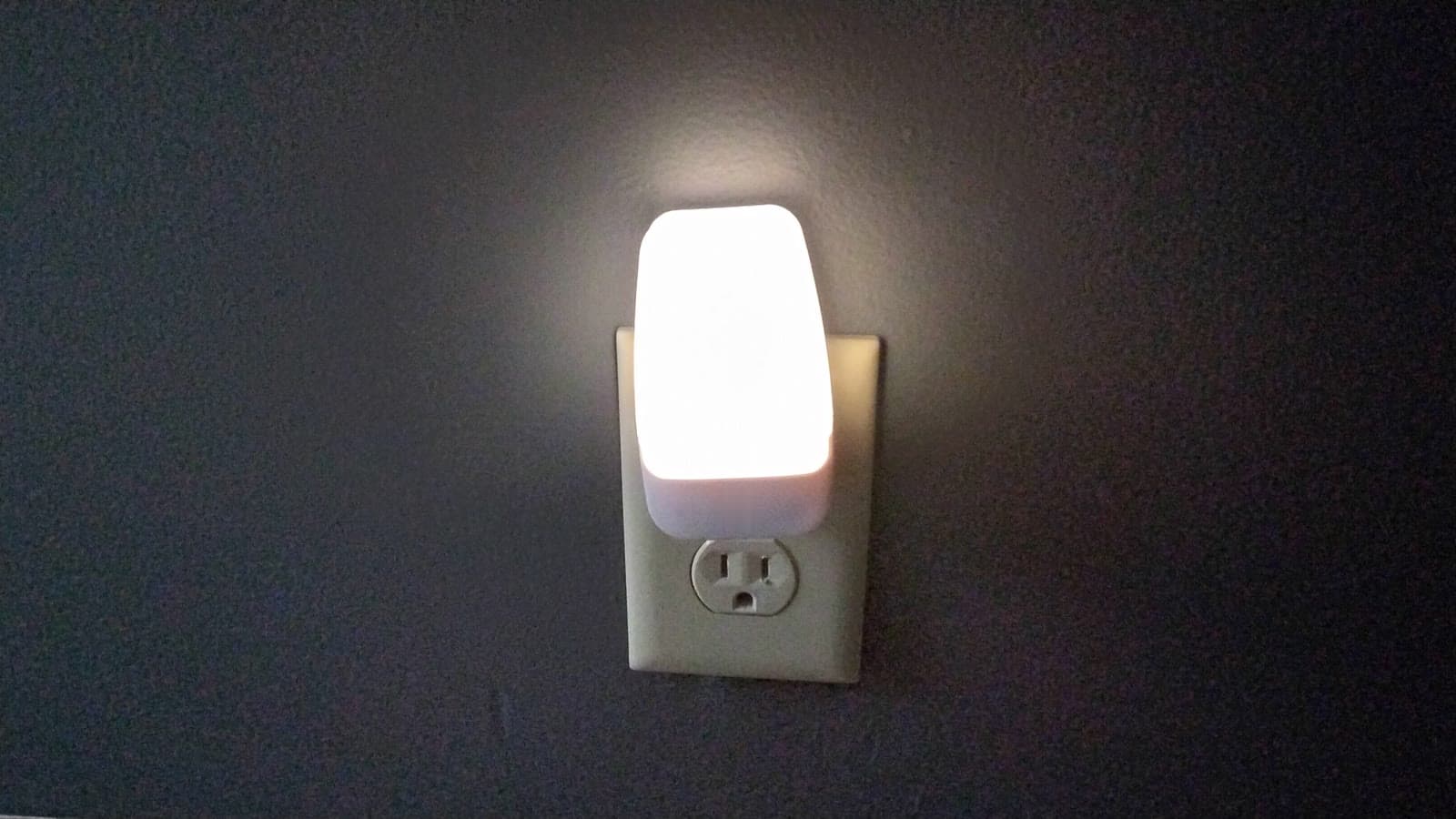
On the night walk, check for a lamp reachable from bed, night lights from bed to bathroom, switches at each end of a long hall (NIA), and a flashlight by the bed for outages. Change burned-out bulbs yourself, especially the high ones.
If your parent relies on powered medical equipment, see our power outage plan.
Kitchen and fire safety
USFA calls cooking the number one cause of home fires. Its booklet's advice:
- Stay in the kitchen while frying, grilling, boiling or broiling, and turn the stove off before stepping away.
- Use a timer for anything simmering, baking or roasting.
- Wear short, close-fitting or tightly rolled sleeves. Bathrobes and burners don't mix.
- Don't cook when sleepy, after drinking, or after taking medicine that causes drowsiness.
The CPSC adds a kitchen fire extinguisher under 10 years old, a clear area around the range, and a sturdy step stool with a handrail so nobody climbs on a chair.
Around the rest of the house, USFA says to keep anything that can burn at least 3 feet from space heaters, radiators, fireplaces and wood stoves, choose heaters that shut off if tipped over, and never smoke in bed or around medical oxygen. The CPSC says to stop using any outlet or switch that feels unusually warm and have an electrician check it as soon as possible.
Medicines and other things to lock up
- Labels. NIA's worksheet asks whether every prescription bottle shows your parent's name, the drug, strength, how often to take it, and the expiration date. Keep a current medication list inside the cabinet door.
- Grandkids. The CPSC notes many poisonings happen when visiting children go through a grandparent's medicine cabinet or purse. If arthritis rules out child-resistant caps, keep easy-open bottles high or locked.
- Old medicine. Flushing may not be appropriate, the CPSC says. Ask the pharmacist how to dispose of it.
- Firearms. If there are guns in the home, NIA's worksheet asks whether they're locked up and unloaded, with ammunition stored separately.
The front door: for your parent and the paramedics
For your parent:
- Outside steps solid, even and slip-resistant, with a handrail (CPSC).
- The porch and walk well lit, with a switch by the door. NIA suggests sensor lights that turn on as someone approaches, and a small bench or table by the door for bags.
For the people coming to help:
- A house number visible at night. As one state's example, the Massachusetts Department of Fire Services says numbers should be at least 4 inches tall, face the street, be lit and sit on a contrasting background, with the number on both sides of the mailbox if the driveway is long. Rules elsewhere vary, so ask the local fire department.
- Emergency numbers and the home address by every phone, as the CPSC and NIA suggest, along with a phone low enough to reach from the floor. A medical alert device is the other route.
- Medical information where responders look. One page with diagnoses, medicines, allergies, doctors and contacts, on the fridge or by the door. See our guides to the Vial of Life and the emergency information sheet for paramedics.
- A plan for keys. Decide who holds a spare or the lockbox code. Our plan for a parent living alone covers keys and daily check-ins.
A maintenance calendar
| How often | What to do | Source |
|---|---|---|
| Monthly | Test every smoke and CO alarm | NFPA |
| Monthly | Test each GFCI outlet (press test, then reset) | CPSC |
| Yearly | Professional inspection of the furnace, chimney and other fuel-burning appliances | CPSC |
| Yearly | Dust the alarms, and change batteries unless they're sealed 10-year units | USFA |
| Now and then | Tug on every grab bar to check it isn't loosening | Alaska Dept. of Health |
| At 10 years | Replace smoke alarms and the kitchen extinguisher | NFPA, CPSC |
| After a hospital stay or new diagnosis | Walk the house again | NIA |
Write install dates on the alarms in marker.
What Medicare does and doesn't pay for
Original Medicare pays for medical equipment, not home improvements. Medicare's national durable medical equipment reference list spells it out:
| Item | Original Medicare | Reason given by CMS |
|---|---|---|
| Grab bars | Denied | Self-help device, not primarily medical |
| Bathtub seats | Denied | Comfort or convenience item |
| Raised toilet seats | Denied | Convenience item |
| Stairway elevators | Denied | Convenience item, not primarily medical |
| Commodes | Covered in some cases | When the person is confined to bed or a room, to a floor with no bathroom, or to a home with no toilet |
Part B does cover durable medical equipment like canes, walkers, wheelchairs and commode chairs when a provider orders it for home use and it comes from a Medicare-enrolled supplier. It also helps pay for outpatient occupational therapy when a provider certifies the need, so the therapist may be covered when the grab bar isn't.
Medicare Advantage can be different
CMS's Medicare Managed Care Manual, chapter 4 lets Medicare Advantage plans offer bathroom safety devices as a supplemental benefit, which can include installation and an in-home bathroom safety inspection by a qualified health professional. It's optional, so coverage varies from plan to plan. Call the number on the plan card and ask, "Does this plan cover bathroom safety devices or a home safety assessment, and how do we request it?" Then check the plan's Evidence of Coverage.
Other places that may help pay
Each has its own rules, and none is guaranteed. In no particular order:
- Area Agency on Aging. The Administration for Community Living says people 60 and older can ask their local agency about home modification and repair funds under the Older Americans Act. Find the office through the Eldercare Locator or 1-800-677-1116.
- Medicaid waivers. States run home and community-based services waivers within federal rules, and a CMS letter to state health officials gives shower grab bars and wheelchair ramps as examples of modifications Medicaid can cover when tied to a person's assessed needs. Waiver services generally go to people who would otherwise need nursing home level care, and rules and wait lists vary by state.
- USDA Section 504 grants. USDA Rural Development offers home repair grants to remove health and safety hazards for homeowners 62 and older with very low income in eligible rural areas. The owner must live there, and a grant is repaid if the home sells within three years.
- VA HISA. For veterans, the VA's Home Improvements and Structural Alterations benefit is a lifetime benefit for medically necessary changes such as entrance access and roll-in showers, with the amount depending on whether the need is service-connected. It needs a prescription from a VA physician. Start with the local VA Prosthetic and Sensory Aids Service, and see our VA paperwork guide.
- Nonprofits. Groups such as Rebuilding Together work through local affiliates whose services vary. NIA also suggests the state housing finance agency, social services and community development groups.
If your parent rents, ACL notes that landlords must allow reasonable modifications for a tenant's needs, though who pays can be a separate conversation.
Write down what you found and fixed
Keep one page: the walkthrough date, alarm install dates, the water heater reading, the last furnace inspection, and anything still unfixed with a name next to it. File it with their emergency papers for the next sibling who visits.
Frequently asked questions
Will a Medicare Advantage plan pay for grab bars?
Sometimes. Original Medicare denies grab bars, but CMS allows Advantage plans to offer bathroom safety devices and installation as an optional extra benefit. Ask the plan directly and check its Evidence of Coverage. Medicaid waivers, the VA and local aging agencies are other places to ask.
What temperature should an elderly person's water heater be set at?
No higher than 120°F, per both the CPSC and USFA. Check with a kitchen thermometer under the faucet first thing in the morning.
Who can do a home safety assessment for an elderly parent?
Ask their doctor about an occupational therapist; Part B helps pay for medically necessary outpatient OT when a provider certifies it. Some Medicare Advantage plans include an in-home bathroom safety inspection, and the Area Agency on Aging can point to local programs.
The house file and the binder
You can do this checklist yourself in an afternoon. If you'd like the paper side handled too, Emergency Binder Now turns about 25 minutes of guided questions into a printable binder for your parent, with a one-page Emergency Information Sheet for the fridge or front door, contacts and medicines in one place, and a list of what's still missing. You can see a sample binder before deciding.
General information only, not medical, legal or financial advice. Ask your parent's doctor or therapist about health and equipment, their plan about coverage, and a licensed professional about electrical, gas or structural work.
This guide is general information to help families get organized. It isn't legal, medical or financial advice; for decisions about your parent, talk with their doctor, pharmacist or an attorney in their state.