Hip Fracture in an Elderly Parent: First 48 Hours and Rehab
By the Emergency Binder Now team · Updated · 12 min read
In this guide
- Signs it might be a broken hip
- What to do on the floor
- What usually happens at the hospital
- What to bring, and what only you know
- Questions for the first two days
- Inpatient or observation: ask every day
- The rehab decision
- Preventing the next fall and the next fracture
- Frequently asked questions
- Keep the next emergency shorter
If you think your elderly parent has broken a hip, call 911 and don't try to get them up. Most hip fractures are repaired with surgery, and orthopedic guidance aims for it within 24 to 48 hours of hospital admission, once your parent is medically ready. Your part in those two days is smaller than the surgeon's, but it counts: bring the medication list and legal papers, tell the team what your parent was like before the fall, and start asking early about rehab.
Below are the first two days in order, then the rehab decision. None of it is medical advice; the care team makes the calls.
Signs it might be a broken hip
The American Academy of Orthopaedic Surgeons' patient site, OrthoInfo, describes the usual picture:
- Sharp pain, usually in the groin and upper thigh.
- They can't stand, put weight on the leg, or move the upper leg, though they may still move their ankle and toes.
- The injured leg often looks shorter than the other and turned or twisted.
- A bruise on the outer hip or thigh where they landed.
Two less obvious patterns from the same page: a small number of hip fractures don't hurt much at first, and your parent may still move the leg and put weight on it, painfully. And sometimes the bone is so weak it breaks while someone is just standing or walking, which OrthoInfo sums up as "the break occurs before the fall." So a parent who says "I just slipped" but now limps and winces needs a doctor the same day.
What to do on the floor
MedlinePlus, the National Library of Medicine's consumer site, lists a suspected broken bone in the hip, pelvis or upper leg as a reason to call 911. Its broken bone first aid page says not to move a person with an injured hip unless it is absolutely necessary, and if you must, to pull them by their clothes (shirt shoulders, belt, pant legs). Don't try to straighten the leg or test whether it moves.
While you wait:
- Keep them warm and still.
- Hold off on food and drink. MedlinePlus's hip fracture surgery page says patients are usually asked not to eat or drink after midnight before surgery, and surgery may come fast. Ask the paramedics before anyone brings coffee.
- Note the time of the fall, whether they hit their head, and whether they take a blood thinner. Our guide on what to write down after a fall has the full list.
- Grab the medication list, insurance cards, glasses, hearing aids and a phone charger, if you can do it without leaving them alone.
What usually happens at the hospital
The ER and imaging
OrthoInfo says an ER doctor or orthopedic surgeon checks for other injuries and for feeling and circulation in the lower leg. Most hip fractures show on an X-ray. A CT scan may follow if the X-ray is unclear or to plan surgery, and an MRI is rarely needed but can find a small break an X-ray misses.
Pain control starts here too. The AAOS plain language summary of its 2024 guideline says "Strong evidence recommends that a preoperative nerve block injection be administered to numb the injured hip, as this helps control pain from the fracture." If your parent is hurting and nobody has mentioned a nerve block, ask.
Surgery timing
The exact wording from that AAOS summary:
It adds that this "may not always be possible, due to the patient's underlying health factors, or resources within the medical facility, such as the availability of the surgical team, and/or operating room." OrthoInfo calls the getting-ready process "optimization," usually including a visit from an internist and sometimes a heart or lung specialist, and says that while this should ideally be done within 48 hours, it sometimes takes longer, and being optimized is better than rushing to surgery.
So a delay isn't automatically a problem. Ask what you're waiting for: an operating room, a lab result, a heart check.
Blood thinners: ask the team
This can move the schedule. OrthoInfo says patients on a blood thinner "may need to wait for your clotting times to improve before you go to the operating room," and that after surgery, patients are placed on a blood thinner to prevent clots, for a length of time the doctor decides.
Your job is information, not decisions. Give the team the name, dose and time of the last dose, including daily aspirin. Ask what the plan is before and after surgery, and who will tell you when it changes. Don't give or skip doses yourself. Our article on parents taking blood thinners covers what to keep handy.
The surgery, in plain terms
The operation depends on where the break is and your parent's health. OrthoInfo and MedlinePlus describe three broad approaches: screws or pins to hold the break while it heals; a plate and screws, or a rod inside the bone; or a partial or total hip replacement. OrthoInfo says a partial replacement is typically the treatment of choice for elderly patients with a displaced break of the femoral neck.
A few people don't have surgery. OrthoInfo mentions certain stable breaks, patients too sick to operate on safely, and people who didn't walk before or have severe medical problems. That's a big conversation, and one where your parent's advance directive matters.
Anesthesia and delirium
The AAOS summary says general and spinal anesthesia are the most common types for this surgery and "both are very safe and have similar patient reported outcomes." Ask which is planned and why.
MedlinePlus lists "mental confusion or delirium" among the surgery's risks: "Older adults who fracture a hip may already have problems thinking clearly. Sometimes, surgery can make this problem worse." Its delirium page names anesthesia and surgery, certain pain medicines and sedatives, infections and severe lack of sleep among the causes, says symptoms can swing through the day, and notes delirium is usually temporary. Hearing aids and glasses can help. Our pieces on a parent in the hospital and on sudden confusion cover what families can do at the bedside.
What to bring, and what only you know
The X-ray tells the hospital about the fracture. It can't tell them who your parent was last Tuesday. That part is yours.
- A current medication list with doses and times, including over-the-counter pills and supplements. MedlinePlus asks patients to tell the surgeon about all of these.
- Allergies, especially to medicines, latex or anesthesia.
- The advance directive, health care proxy and POLST if they have one, or a note of where each is kept.
- Medicare card and any supplemental or Medicare Advantage card.
- Glasses, hearing aids and dentures in labeled cases (how to keep them from vanishing).
- Primary doctor and pharmacy names and numbers.
Then hand the team your parent's baseline: what they could do two weeks ago.
| Baseline question | Example answer |
|---|---|
| How did they walk before? | Cane outdoors, nothing indoors, about two blocks |
| Stairs at home? | Twelve steps to the bedroom, one rail |
| Who lives with them? | Alone; daughter 40 minutes away |
| Thinking and memory | Manages own pills and bills; forgets names |
| Confusion before this? | Never, so anything now is new |
| Hearing and vision | Hearing aid in left ear; reading glasses |
A doctor who doesn't know your mother drove herself to church on Sunday may read post-surgery confusion as her normal. A rehab planner who doesn't know about the twelve stairs may plan for a one-level house.
Questions for the first two days
Write the answers beside them.
- What kind of fracture is it, and what surgery is planned?
- When is surgery expected, and if it's past 48 hours, what are we waiting for?
- Is a nerve block being used for pain?
- Which anesthesia is planned, and how will you watch for delirium?
- What's the plan for the blood thinner, before and after?
- Is my parent an inpatient, or here under observation?
- When does physical therapy start, and how much weight can the leg take?
- Who is the case manager, and when can we talk about rehab?
- Will anyone check bone health before discharge?
On question 7: MedlinePlus says patients are helped from bed to a chair the first day after surgery, and OrthoInfo says most start physical therapy the day after. If that isn't happening, ask why.
Inpatient or observation: ask every day
Medicare.gov's inpatient or outpatient status page says you're an inpatient starting when you're formally admitted with a doctor's order. Someone getting ER or observation services without that order is an outpatient "even if you spend the night in the hospital." Observation is the period while the doctor decides whether to admit. Medicare.gov suggests asking each day, and says the hospital must give a Medicare Outpatient Observation Notice (MOON) after more than 24 hours of observation.
Here's why it matters for a hip. Medicare.gov's skilled nursing facility page says Original Medicare covers a nursing facility stay only after a medically necessary inpatient stay of at least 3 days in a row, counting the admission day but not the discharge day, and that ER or observation time doesn't count. A fast surgery and fast discharge can leave a family a day short. Our article on the Medicare 3-day rule covers counting, waivers and appeals.
The rehab decision
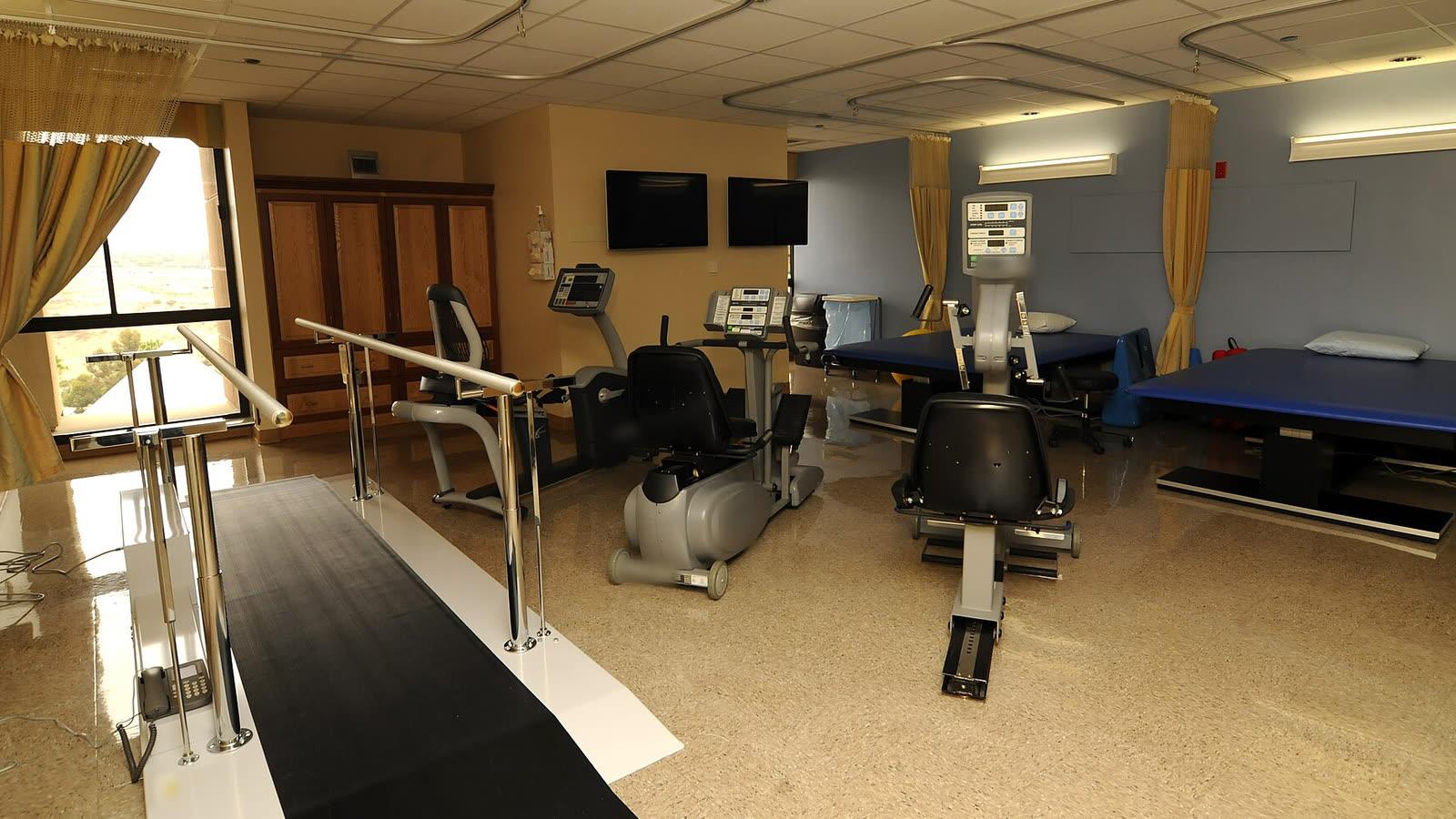
OrthoInfo says many patients go home after hip fracture surgery and some need short-term care in a rehab facility, usually people who are elderly or have no one to help at home. After the hospital, the usual paths are these three.
| Inpatient rehab facility (IRF) | Skilled nursing facility (SNF) | Home health | |
|---|---|---|---|
| What it is | Rehab hospital or unit: intensive therapy, doctor supervision, coordinated care | Short-term daily skilled nursing or therapy in a certified facility | Part-time skilled nursing and therapy at home |
| Therapy | Generally at least 3 hours a day, at least 5 days a week | Daily, per the care plan | Visits as often as ordered |
| Key Medicare condition | A provider certifies the need for intensive rehab and medical supervision | 3-day inpatient stay first (Original Medicare); entry generally within 30 days | Parent is "homebound" and needs part-time skilled care |
| Fits when | They can take, and gain from, hours of therapy daily | They need daily skilled help but not that intensity yet | They're safe at home with help between visits |
Sources: Medicare.gov on inpatient rehabilitation, skilled nursing facility care and home health services; the therapy hours come from Medicare's general IRF coverage rule, 42 CFR 412.622, which allows 15 hours a week in some documented cases. These are general Medicare rules for rehab facilities, not a promise of a bed.
What the brochures tend to skip:
- Hip fracture is on the federal IRF list. To be paid as rehab facilities by Medicare, rehab hospitals and units must show that at least 60 percent of their inpatients need intensive rehab for one or more listed conditions, and "fracture of femur (hip fracture)" is one (42 CFR 412.29). That rule is about the facility's patient mix, not a guarantee your parent will be admitted, but asking "was an IRF considered?" is a normal question.
- The intensity is the point. The same rule says patients must generally be able to take part in and benefit from that program. A parent with delirium may start in a SNF and do well. That's a medical call about readiness, and it isn't a downgrade.
- Home health has gaps. Medicare.gov says it doesn't cover 24-hour care at home, or bathing and dressing help when that's the only care needed. Someone covers the hours between visits. See home health care vs. home care.
- Medicare Advantage differs. Medicare.gov notes plans may waive the 3-day stay. Plans may also have networks and approval steps, so call early.
OrthoInfo says a facility stay lasts "until you can walk independently and manage your daily activities." When the case manager hands you a facility list, ask which have openings, take the plan, and see hip fractures often. Our hospital discharge checklist covers the day itself.
Preventing the next fall and the next fracture
The AAOS summary says hip fractures in older adults are often tied to osteoporosis. The Bone Health & Osteoporosis Foundation says, "If you're 50 or older and have broken a bone, ask your doctor or healthcare provider about a bone density test" (BHOF).
Ask whether the hospital has a fracture liaison service. BHOF describes it as a program that provides a bone evaluation and a personalized plan to prevent future broken bones, with a coordinator who follows up (BHOF, Fracture Liaison Service). If there isn't one, put "bone density and osteoporosis treatment?" on the agenda for the first visit with the primary doctor. MedlinePlus on osteoporosis notes many people have a fracture before learning they have it, and that treatment may include lifestyle changes, calcium and vitamin D, and medicines. Which of those is right is your parent's and their doctor's decision, so don't add supplements or change medicines on your own.
For falls, AAOS's hip fracture prevention page says most falls happen at home and suggests clearing floors, removing or taping down loose rugs, better lighting, grab bars and stair rails, plus an eye exam and a talk with the doctor about medication side effects. MedlinePlus's hip fracture discharge page adds a bed low enough for feet to touch the floor, a raised toilet seat at first, and chairs with armrests. If this wasn't the first fall, read about a parent who keeps falling, and for the first week home, caring for a parent after surgery.
Frequently asked questions
How soon should an elderly person have hip fracture surgery?
The AAOS 2024 guideline summary says surgery "should be within 24-48 hours following hospital admission," while noting health problems or hospital resources can delay it. OrthoInfo says being medically ready beats rushing.
Can an elderly person walk with a broken hip?
Usually not. OrthoInfo says most people can't stand or bear weight, but with some breaks a person can still put weight on the leg, painfully. Hip pain after a fall needs a doctor.
Is confusion after hip surgery normal?
It's a known risk, not something to shrug off. MedlinePlus lists delirium among the surgery's risks and says it is usually temporary. Tell the nurse about any change from your parent's usual thinking.
How long is the hospital stay after a broken hip?
MedlinePlus says 3 to 5 days, with full recovery taking from 3 to 4 months to a year. Your parent's team will give a closer estimate.
Keep the next emergency shorter
Almost everything families hunt for in these 48 hours is the same short list: medications, the blood thinner and its last dose, allergies, the proxy and advance directive, insurance cards, doctors, and a baseline nobody wrote down. You can put that on paper yourself this weekend with the tables above. If you'd rather not start from a blank page, Emergency Binder Now turns about 25 minutes of guided questions into a printable binder, with a one-page Emergency Information Sheet for paramedics and the ER and a list of what's still missing. See a sample binder and decide if it fits.
This guide is general information to help families get organized. It isn't legal, medical or financial advice; for decisions about your parent, talk with their doctor, pharmacist or an attorney in their state.