Pacemaker ID Card for an Elderly Parent: What to Keep With It
By the Emergency Binder Now team · Updated · 12 min read
In this guide
- What's on the card, and what each line is for
- If the card is lost, outdated or never arrived
- Pacemaker or ICD? Know which one your parent has
- What else to keep with the card
- Why ER staff, paramedics and imaging techs ask about it
- If an ICD shocks: when to call the doctor and when to call 911
- Everyday interference: phones, magnets, cooktops and security gates
- Recall and safety notices
- Turning a device off near the end of life
- Keeping the device facts in one place
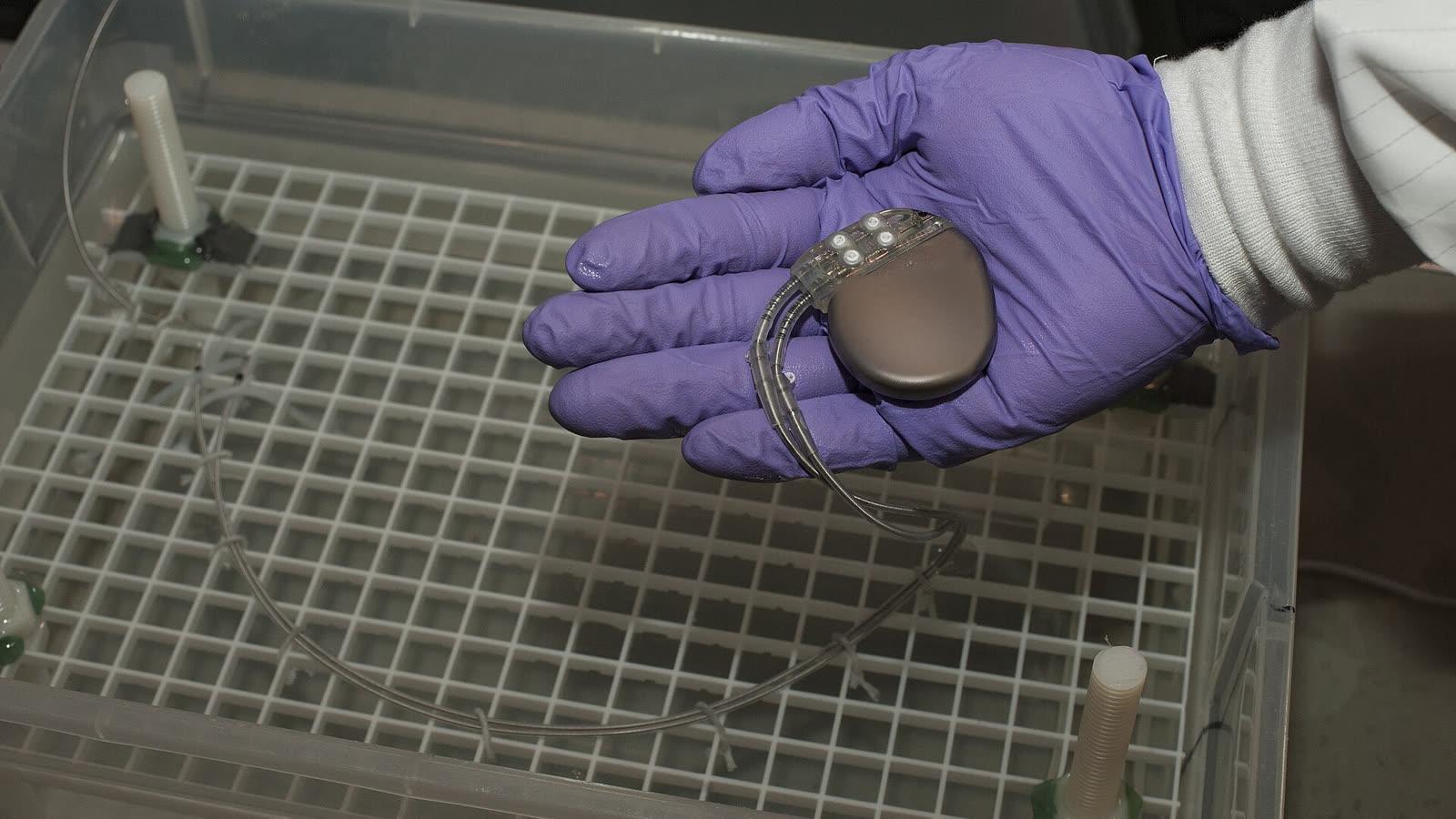
A pacemaker or defibrillator ID card tells strangers three things fast: your parent has an implanted heart device, what kind it is, and who made it. Keep it in their wallet at all times, put a photo of both sides in the family's phones, and copy its details onto their emergency sheet with the clinic's phone number and the reason they have the device. If the card is lost, start with the clinic that checks the device. For a new card, NHLBI's advice is to contact the device manufacturer (NHLBI, Living With an ICD).
What's on the card, and what each line is for
The American Heart Association says the card from the hospital lists the pacemaker, when it was placed, its settings, the healthcare professional and the hospital. Carry it always, the AHA says, in a wallet, purse or phone case, and consider a medical ID bracelet or necklace as a backup (AHA, Living With Your Pacemaker). The AHA's printable pacemaker wallet card has blanks for most of what's in the table below, plus the paced rate.
| Line on the card | What it tells the people treating your parent |
|---|---|
| Device type (pacemaker, ICD, or a combined device) | Whether it can deliver a shock, and how cautious they need to be with certain procedures |
| Manufacturer | Which company's equipment can read the device |
| Model and serial number | Whether it's cleared for MRI under certain conditions, and whether a safety notice applies to it |
| Leads | The wires that run from the device to the heart, part of the record the clinic and imaging team will want |
| Implant date | A rough clue to battery age (the clinic's check is what counts) |
| Doctor and hospital | Who to call for the records and settings |
Why the manufacturer's name matters so much
To read the data stored in a heart device or check how it's working, clinicians first need to know who made it, because each major manufacturer's programmers and readers only work with that company's devices. That's the background to one small study in the Journal of Urgent Care Medicine: at a single Midwest community hospital's emergency and urgent care department, 55% of 106 pacemaker and defibrillator patients seen from June 2013 to September 2014 presented with their ID card (Le et al., J Urgent Care Med, 2021). One hospital can't speak for everywhere, but the authors' point holds: without the card, staff may have to search the record or call each manufacturer, which they call often time-consuming.
MedlinePlus says to try to remember the name of the pacemaker manufacturer in case the card is lost (MedlinePlus, Pacemaker implantation). For an ICD, it says to know both the type and the company that made it (MedlinePlus, ICD discharge). If Dad can't reliably recall it, you should.
If the card is lost, outdated or never arrived
- Call the device clinic, the cardiology or heart rhythm office that checks the device. It has the make, model and implant date on file.
- Contact the manufacturer. NHLBI says that if your parent moves or gets a new phone number, contact the device manufacturer to get a new ID card (NHLBI). It's reasonable to start there for a lost card too, and the clinic can confirm which company to call.
- Check the hospital discharge packet, which may name the device, or ask the hospital's records office (our guide to getting a parent's medical records walks through that).
- Use the AHA's blank card as a stopgap. Fill in what you know and keep it in the wallet until the official one arrives.
Pacemaker or ICD? Know which one your parent has
Families say "pacemaker" for everything. The people treating your parent need to know which it is.
| Pacemaker | ICD (implantable cardioverter-defibrillator) | |
|---|---|---|
| Main job | Keeps a slow heart from beating too slowly (MedlinePlus) | Watches for a dangerous fast rhythm and shocks the heart back to normal (MedlinePlus, ICD) |
| Can it shock? | No | Yes. Most ICDs can also pace, but the subcutaneous ICD cannot |
| Usual check schedule | Usually every six months or a year, per the AHA | At least every 6 months, per NHLBI |
| Battery life | MedlinePlus says about 6 to 15 years (MedlinePlus) | MedlinePlus says designed to last 4 to 8 years (MedlinePlus) |
Other sources give somewhat different battery ranges, so treat these as ballparks; the clinic's estimate at each check is the number that matters. MedlinePlus also notes that most biventricular pacemakers, used in heart failure, can also work as an ICD. If you're not sure what your parent has, ask the clinic and write the answer down in plain words: "ICD with pacing," not just a model number.
What else to keep with the card
The card identifies the device. It doesn't say why your parent has it, who's watching it, or when it was last checked. Those go on the emergency sheet and in the binder.
- Device type in plain words (pacemaker, ICD, combined device) and which side of the chest it's on
- Manufacturer, model and implant date, copied from the card
- Why they have it, in the words their cardiologist used, such as slow heart rate, heart block, or a prior dangerous rhythm
- Device clinic name and phone, plus the after-hours number if there is one
- Cardiologist or heart rhythm doctor, if different from the clinic
- Remote monitoring: whether they have a home monitor, where it sits, and whether it's plugged in and working
- Last check and next check dates, and the most recent battery estimate the clinic gave you
- Recent shocks, if any, with dates
- Medicines, especially heart rhythm drugs and blood thinners
- Their wishes about the device if they've discussed turning off shocks near the end of life (more on that below)
On the remote monitor: NHLBI says the provider may give a monitoring box whose data goes to the manufacturer, the provider or both. A monitor that got unplugged when the nightstand moved isn't monitoring anything. Ask the clinic what happens on their end if transmissions stop.
The medicines list deserves its own page; here's how to build a medication list for an elderly parent. If a blood thinner is on it, see our guide for an elderly parent on blood thinners too.
Why ER staff, paramedics and imaging techs ask about it
The AHA says emergency personnel need to know your parent has a pacemaker in case of an accident, and that medical staff should know before ordering an MRI (AHA). Put the device near the top of the emergency information sheet for paramedics, and add the card to what to bring to the ER.
MRI
The FDA says people with implanted devices should not have an MRI unless the device has been positively identified as MR Safe or MR Conditional, and that a device with unknown MRI status should be assumed unsafe (FDA, MRI benefits and risks). NHLBI adds that newer ICD models may allow an MRI, and older ones can be scanned when precautions are in place. It depends on the exact device and leads, which is what the model numbers are for. If an MRI is scheduled, tell the ordering doctor and the imaging tech, and call the device clinic ahead of time. The AHA also says to tell technicians before a CT scan, though the risk there is low (AHA, Devices That May Interfere).
Surgery, dental work and other procedures
NHLBI lists the medical and dental procedures that can affect a pacemaker: electrocautery used to stop bleeding during surgery, MRI, microwave diathermy in physical therapy, radiation therapy for cancer, shock-wave lithotripsy for kidney stones, and TENS units for pain. Its advice: always tell the doctor or dentist and show the card, because they may be able to make changes for the procedure (NHLBI, Living With a Pacemaker).
The ones that slip through don't feel like heart business: a skin cancer removal, a physical therapy order, a dental extraction. Add "has a pacemaker" to every intake form, every time. If surgery is coming, our guide to caring for a parent after surgery covers the weeks after.
Airport screening
The TSA says to tell the officer about a pacemaker, defibrillator or other internal device, and that someone with an internal device such as a pacemaker should not be screened by a walk-through detector. The body scanner can make screening easier, and anyone who skips both the scanner and the walk-through detector gets a pat-down. TSA also says to consult the doctor before flying (TSA). Health sources are calmer about the detectors themselves: the AHA says metal detectors won't damage a pacemaker, and NHLBI calls the risk of harm low. At the checkpoint, though, TSA's instructions are the ones to follow.
For handheld wands, MedlinePlus says they may interfere with an ICD and suggests showing the card and asking for a hand search. The AHA says if security insists on the wand, ask them not to hold it near the device longer than necessary. A parent who gets flustered at security will do better with the card in hand and one practiced sentence: "I have a pacemaker, so I shouldn't go through the walk-through detector. Here's my card."
If an ICD shocks: when to call the doctor and when to call 911
Put this on the fridge sheet; nobody remembers it in the moment. From NHLBI and MedlinePlus (NHLBI; MedlinePlus):
| What happened | What the guidance says |
|---|---|
| Any shock at all | Tell the cardiologist. Settings or medicines may need changing |
| One or two strong shocks in a short time, and symptoms go away | Contact the provider and set up an appointment that day or the next |
| Several strong shocks in a short time | Go to the emergency department. NHLBI puts this under its "when to call 911" heading |
| Symptoms of a heart attack or warning signs of cardiac arrest | Call 911 |
| A shock, and they still don't feel well or they pass out | Contact the cardiologist, per MedlinePlus, which also says to ask the provider ahead of time when to call the office versus 911 |
If your parent passes out and doesn't come around quickly, has chest pain or trouble breathing, or you aren't sure, call 911 rather than waiting on a callback. For everything in between, get the clinic's own rule. At the next device check, ask: "If Mom gets shocked, exactly when do you want a call, and when should we skip the call and dial 911?" Write their answer, word for word, on the emergency sheet.
NHLBI notes that an ICD can sometimes shock when it isn't needed, and that some people develop anxiety or even PTSD after shocks; raise that with the care team.
Everyday interference: phones, magnets, cooktops and security gates
Most of daily life is fine. The AHA says consumer appliances and electronics generally don't affect these devices, and lists microwaves, electric blankets, heating pads, hair dryers and kitchen appliances as posing little or no risk (AHA). The cautions are mostly about distance.
- Phones and smartwatches. The FDA recommends keeping them at least six inches from an implanted device, especially a defibrillator, and not carrying them in a pocket over it. Strong magnets in some can switch a device into "magnet mode" until the magnet moves away; the FDA calls the risk low (FDA, magnets in cell phones and smart watches). Hold the phone to the ear on the side opposite the device, as NHLBI suggests.
- Headphones, earbuds and other magnets. The AHA says to keep headphones and magnets at least six inches from the device, not to drape headphones around the neck, and to avoid magnetic therapy bracelets, pillows and mattress pads, which turn up in some adjustable beds.
- Induction cooktops. The AHA and FDA pages above don't mention them. Harvard Health Publishing says a distance of 12 to 24 inches from an induction cooktop is recommended, on or off (Harvard Health). If your parent cooks on induction or is shopping for a stove, ask the device clinic what applies to their device.
- Store anti-theft gates and security detectors. The AHA says these are unlikely to cause problems in most people, but not to linger in them or lean against them.
- Medical alert pendants. The AHA suggests checking with the alert company's customer support about whether their product could affect a pacemaker or ICD. If you're shopping for one, add it to your questions for a medical alert company.
If your parent still tinkers in the garage, ask about welding equipment, jumper cables, engine ignition systems and electric pet fences, which the AHA lists as needing distance. NHLBI adds: don't lean over car engines.
Recall and safety notices
NHLBI suggests asking at visits whether the manufacturer has announced any problems with the device (NHLBI, pacemakers), and its ICD page notes that a recalled device may have to be replaced. The FDA posts notices on its Medical Device Recalls and Early Alerts page. Letters to an older parent get set aside with the catalogs, so keep the model and serial numbers somewhere you can check a notice against, not only in the wallet. If a letter about the device shows up, call the device clinic and ask whether it applies. Families can also report a serious problem with an ICD to the FDA's MedWatch program, NHLBI notes.
Turning a device off near the end of life
NHLBI says a person has the right to ask for a pacemaker to be turned off or removed if it's no longer helping, for example when seriously ill or nearing the end of life, and that the doctor may suggest an ethics consultation first (NHLBI). For an ICD that also paces, NHLBI says the shock function can be turned off without surgery while pacing continues, and it suggests people include their wishes about deactivation in their advance directive (NHLBI).
The Heart Rhythm Society's 2010 consensus statement on these devices near the end of life was endorsed by groups including the AHA and two hospice and palliative care organizations, and one of its stated goals is to highlight proactive communication by clinicians (Heart Rhythm Society). Your parent doesn't have to wait for the cardiologist to bring it up.
If hospice comes in, ask the team early what the plan is for the device. Our guides to hospice vs palliative care and advance directive forms by state cover the rest of that decision and where the wishes get written down.
Keeping the device facts in one place
The card stays in the wallet. Everything else on the checklist can live on one binder page and one line of the emergency sheet, and you can build that yourself with this guide and a call to the device clinic. If you'd rather have it organized for you, Emergency Binder Now turns about 25 minutes of guided questions into a printable binder, including a one-page sheet for paramedics and the ER with conditions, medications and doctors, where the device and the clinic's number fit. You can see a sample binder first.
This article is general information, not medical advice. Questions about your parent's device, shocks or procedures belong with their cardiologist or device clinic.
This guide is general information to help families get organized. It isn't legal, medical or financial advice; for decisions about your parent, talk with their doctor, pharmacist or an attorney in their state.