Keeping Hearing Aids, Glasses and Dentures Safe in the Hospital
By the Emergency Binder Now team · Updated · 10 min read
In this guide
- Why these three matter more than they look
- Where they actually go missing
- Before the hospital: label, photograph, back up
- Admission day: tell the nurse and get it written down
- Room changes, procedures and discharge
- If something goes missing
- Replacing them: what Medicare covers
- Frequently asked questions
- Keep the details in one place
To keep a parent's hearing aids, glasses and dentures from getting lost in the hospital, give each one its own labeled case, take a phone photo of each item before admission, and tell the nurse on day one so the items get written on the belongings list. Then keep them off the meal tray, the bed and the pillow, where hospitals themselves say they disappear. If something does go missing, report it the same day and ask for patient relations.
These are also the three things your parent needs most to follow what's happening. Here's why, and how to keep them in the room.
Why these three matter more than they look
A parent who can't hear or see well in a strange room is at higher risk of delirium, a sudden state of confusion that's common in older hospital patients. The best-known evidence is a 1999 study in the New England Journal of Medicine (Inouye and colleagues) of 852 patients aged 70 and older, which tested the approach behind today's Hospital Elder Life Program. The team used standard protocols for six delirium risk factors, two of which were visual impairment and hearing impairment. Delirium developed in 9.9 percent of the intervention group compared with 15.0 percent of the usual-care group.
That study bundled six things, so glasses alone didn't produce the result, but vision and hearing were in the package on purpose. Our guide to a parent's first days in the hospital covers delirium warning signs and what family can do about the other risk factors.
Hearing is also about plain information. The National Institute on Aging's page on hearing loss (reviewed in 2023) says about one-third of older adults have hearing loss, and that people with it may have trouble understanding a doctor's advice. A parent without hearing aids may simply nod along to questions about pain and allergies. A parent without dentures may leave the meal tray mostly untouched, and nobody connects the two.
Where they actually go missing
Hospitals know exactly where. Inspira Health's belongings guide asks patients not to put dentures, hearing aids or glasses on a meal tray, under a pillow, on the sheets, on the bedside table, in a robe pocket or "in any concealed place where they may be lost or accidentally thrown out." Memorial Health's belongings page gives the same warnings and adds that glasses shouldn't be left in a gown pocket or on the bed.
Picture dentures set on a lunch tray that an aide clears, or a hearing aid that falls out during a nap and leaves with the sheets. Moves add risk too: ER to imaging to a room to another unit, each one a chance for a small case to stay behind on a stretcher.
Before the hospital: label, photograph, back up
Do this now, while nobody is in a hurry.
| Item | How to label it | Backup worth having | Write down |
|---|---|---|---|
| Glasses | Name and your phone number on the case; a small label on the inside of the temple arm if there's room | An older pair or simple readers in the go bag | The current prescription, or where to get it |
| Hearing aids | Name and phone number on the case; ask the hearing provider about other marking | Spare batteries, or the charger and cord | Make, model, which ear is which, serial numbers, where they were bought, any loss or damage warranty |
| Dentures | Name on the case; ask the dentist about permanent marking inside the denture | A labeled spare case | Upper, lower, full or partial, and the dentist's name |
Denture marking: ask the dentist
A dentist or dental lab can put a permanent name mark inside a denture, and a few states push for it. Washington law (RCW 18.32.695) requires dentures made by a Washington dentist to be permanently marked with the patient's name, or initials, unless marking isn't practical or clinically safe; older dentures get marked at the next rebasing. The 1987 bill report says the push came from nursing homes, where dentures cleaned together were getting mixed up. Florida's dental board requires dentists to offer marking when they make a removable denture, unless it isn't practical or clinically safe, and the rule names misplaced or switched dentures in hospitals and nursing homes as the reason. Minnesota requires nursing homes to label full and partial dentures with the resident's name or other identifiers within seven days of admission. Other states have their own rules or none, so if your parent's dentures aren't marked, ask the dentist at the next visit or the next reline.
The photo inventory
Take a clear phone photo of each item next to its case and keep them in one album you can share with siblings. If a hearing aid turns up in a lost-and-found bin with four others, a photo settles it fast. If nothing turns up, the photos help with a claim.
Spares and power
- An older pair of glasses or readers in the hospital go bag
- A full pack of the right hearing aid batteries, or the charger and a long cord
- A spare labeled denture case
- A personal sound amplifier, if your parent's hearing is poor and they lose aids often
A hearing aid with a dead battery is about as useful as one in the laundry. Put "check hearing aid batteries" on the list for whoever visits each day.
Admission day: tell the nurse and get it written down
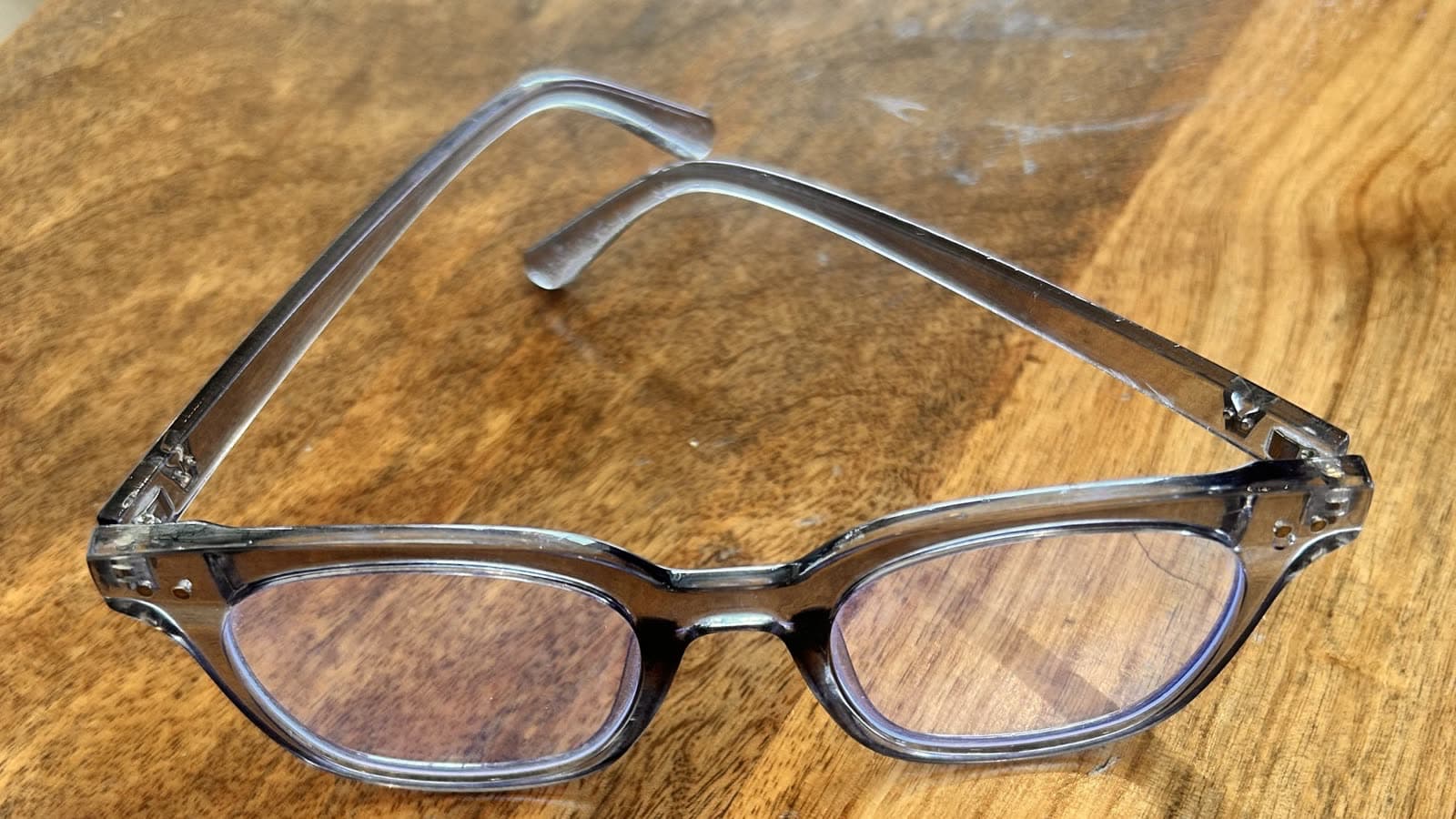
The single most useful sentence is: "My mom wears hearing aids, glasses and a full upper denture. Can you note them on her belongings list and in her chart?" Then check that they're on the list, with a description. "Glasses" is less useful than "black frames, brown case with her name."
A few more asks for that first conversation:
- A labeled denture cup. Many hospitals hand these out; Memorial Health says a care team member will provide one labeled with the patient's name. If nobody offers, ask.
- A note above the bed. Something short like "Wears hearing aids and glasses. Please put them in during the day and store in the labeled cases at night." Ask the nurse if that's allowed on the unit. Staff change every shift, and a note tends to outlast a verbal handoff.
- A home for the cases. Agree on one spot, such as the top drawer of the bedside cabinet, and tell your parent and the nurse.
- Your contact number on the whiteboard, so someone can call if an item breaks or goes missing.
If your parent has memory loss, expect them to take hearing aids out and tuck them somewhere. Ask staff to check pockets and bedding before linens go out, and see our guide to planning around early memory loss for the broader picture. A short line on your parent's emergency information sheet, "wears bilateral hearing aids, upper denture, glasses for reading," also tells the ER this before anyone asks.
If the hearing aids aren't working: ask for help communicating
Hospitals have a legal duty here. Under the ADA, the Justice Department's hospital guidance says hospitals must provide effective communication for patients, family members and visitors who are deaf or hard of hearing, throughout their programs including emergency and inpatient care. Section 1557 of the Affordable Care Act has a matching rule for health programs that receive federal money: 45 CFR 92.202 requires appropriate auxiliary aids and services, free of charge and in a timely manner.
HHS's Office for Civil Rights lists examples of these aids, including assistive listening devices, written materials and qualified interpreters, and advises telling the hospital as soon as possible that your parent is hard of hearing and asking for the aid you think they need. So if a hearing aid is lost or dead on a Saturday, ask the nurse whether the unit has an amplifier or listening device, and ask that big conversations, like a diagnosis or a discharge plan, be written down too. The ADA guidance covers companions too, and one of its own examples is discussing treatment with a patient's spouse who is hard of hearing. So this applies if the parent at the bedside, not the patient, is the one who can't hear.
Room changes, procedures and discharge
Before every move, do a thirty-second sweep: bed, pillowcase, under the mattress edge, tray table, bathroom sink, drawers. If you can't be there, ask the nurse to send the cases with your parent rather than in a bag that follows later. Before surgery or a scan, staff may ask your parent to remove dentures, hearing aids and glasses. Ask where the items will be kept and who will bring them back.
At discharge, pack the three cases first, before the paperwork starts. (For the ER end of things, see what to bring to the ER.) Our hospital discharge checklist covers the rest of that day. And if your parent is heading to a nursing home or rehab, carry the labels and the photo album forward; the nursing home admission checklist explains the facility's inventory.
If something goes missing
- Report it to the nurse right away, with a description and the photo. The sooner staff look, the more places they can check: the linen cart, the tray cart, the previous room.
- Ask about lost and found and security. Ask how long found items are held, and leave your name and phone number.
- Check your own bags and car. Things come home in a jacket pocket more often than anyone admits.
- Ask for patient relations or the patient advocate. Many hospitals have someone in this role. Explain what was lost, when it was last seen, and that it was on the belongings list, if it was.
- Ask how to file a claim, and put it in writing. Include dates, the unit, who you told, the photos and any receipt or provider records. Keep notes of every call.
Be realistic. Many hospitals state in their policies that patients are responsible for their belongings; both Inspira and Memorial say they aren't responsible for replacing lost or misplaced items. Still, a policy line isn't the end of the conversation. Ask for a review anyway; if the hospital looks at the claim, the belongings list and your notes are what it will look at.
Replacing them: what Medicare covers
| Item | Original Medicare | Medicare Advantage |
|---|---|---|
| Hearing aids | Not covered, including exams for fitting them | Some plans offer hearing benefits |
| Eyeglasses | Usually not covered; Part B covers one pair with standard frames after each cataract surgery that implants an intraocular lens | Some plans offer vision benefits |
| Dentures | Not covered in most cases | Some plans offer dental benefits |
Medicare.gov says to contact the Medicare Advantage plan for details, so call the number on the card. If your parent has Medicaid, retiree coverage or VA benefits, check those too.
For hearing, there's also a stopgap. Since October 17, 2022, the FDA has allowed over-the-counter hearing aids for adults 18 and older with perceived mild to moderate hearing loss, sold in stores and online without a prescription or exam. The FDA says they aren't meant for severe or profound loss, so for a parent with significant loss they're a backup while the real pair is replaced, and the hearing provider should weigh in.
Frequently asked questions
Should my parent wear hearing aids and glasses in the hospital?
In general, yes, during waking hours, unless a doctor says otherwise for a procedure. Vision and hearing aids were part of the delirium prevention program studied in hospitalized older adults. Ask the nurse if you're unsure.
Is the hospital responsible for lost dentures?
It depends on the hospital and the circumstances. Many policies say patients are responsible for their belongings, but you can still report the loss, ask patient relations to review it and file a written claim. A belongings list that shows the dentures were logged helps.
Does Medicare pay to replace lost hearing aids or dentures?
Original Medicare doesn't cover hearing aids or dentures, and covers eyeglasses only after cataract surgery with an intraocular lens. Some Medicare Advantage plans include hearing, vision or dental benefits, so check the plan.
Keep the details in one place
All of this works better when it lives with the rest of your parent's information: the device details next to their medication list, the dentist and hearing provider in the contacts, and the photos where a sibling can find them. If the hospital won't tell you much on the phone, a HIPAA authorization is usually what's missing. You can build that file yourself from this guide, or Emergency Binder Now can organize it from about 25 minutes of guided questions, producing a printable binder with a one-page Emergency Information Sheet, medications, doctors and a list of what's still missing. To see the format, see a sample binder.
This article is general information, not legal, medical or financial advice. Hospital policies on belongings and lost property vary, as do state rules on denture marking. For your parent's situation, talk with their care team, the hospital's patient relations office or their health plan.
This guide is general information to help families get organized. It isn't legal, medical or financial advice; for decisions about your parent, talk with their doctor, pharmacist or an attorney in their state.