Parent With Hearing Loss: Alarms, Text to 911 and Hospital Help
By the Emergency Binder Now team · Updated · 11 min read
In this guide
- How common this is
- Alarms they can see or feel
- Weather and emergency alerts
- Calling 911 without hearing the call
- Telling paramedics and the ER
- In the hospital: the right to communicate
- Hearing aid care during a stay
- When the hearing loss is the emergency
- The hearing page in your parent's binder
- Frequently asked questions
- Doing it yourself, or handing it off
An emergency plan for a parent with hearing loss has to work when the hearing aids are out, which is usually at night. That means smoke and carbon monoxide alarms that flash or shake the bed, a way to reach 911 without hearing the dispatcher (text to 911 where it's offered, or a TTY call), and a written note telling paramedics and hospital staff how to talk with them. Add one rule: hearing that drops suddenly, especially in one ear, means seeing a doctor right away.
How common this is
The National Institute on Deafness and Other Communication Disorders (NIDCD) reports in its quick statistics: "22% of those ages 65-74 and 55% of those who are 75 and older have disabling hearing loss." The same page adds: "Among adults ages 70 and older with hearing loss who could benefit from hearing aids, fewer than 1 in 3 (30%) has ever used them."
So most older parents who could use hearing aids have never worn them, and those who do take them out to sleep.
The National Institute on Aging (NIA) adds a point every ER visit should account for: older people are sometimes mistakenly thought to be confused, unresponsive or uncooperative because they don't hear well.
Alarms they can see or feel
The National Fire Protection Association's tip sheet on smoke alarms for people who are deaf or hard of hearing (a copy hosted by York County, Virginia) lists three options:
- Strobe lights that flash when the smoke alarm sounds.
- A pillow or bed shaker, set off by the sound of the smoke alarm, that can wake someone who is deaf.
- For people who are hard of hearing, an alert that uses a loud, mixed, low-pitched sound. They may find a shaker helpful too.
The sheet also says to put smoke alarms in every bedroom, outside each sleeping area and on every level, to interconnect them so that when one sounds they all sound, and to test them at least once a month. The U.S. Fire Administration's smoke alarm page confirms there are alarms for people with hearing loss that flash and/or vibrate.
What the product pages leave out:
- Interconnection is what makes a shaker work. The shaker listens for an alarm. If the fire starts in the kitchen and that alarm isn't linked to the bedroom one, the shaker may never hear it.
- Test it with your parent in bed. Aids out, lights off, press the test button. Does the strobe reach their line of sight? Does the shaker wake them, or just buzz under a thick pillow?
- Cover carbon monoxide too. The NFPA sheet is about smoke alarms. When you shop, check whether the strobe or shaker also responds to the CO alarm, or choose a combined unit that flashes for both.
- Call the fire department first. The Seattle Fire Department, for one, offered free installed strobe smoke alarms to residents who are deaf or hard of hearing in a 2020 post. Programs vary and change, so ask what yours offers now.
Weather and emergency alerts
Wireless Emergency Alerts are the warnings that pop up on cell phones. The National Weather Service says WEA messages look like a text, come with a special tone and vibration repeated twice, and are free with no app or sign-up.
That vibration helps if the phone is in a pocket. A phone charging across the room won't wake anyone. Many phones have an accessibility setting that flashes a light for alerts; check your parent's. Also sign yourself up for your parent's county text alerts. WEA goes to phones in the affected area, so if you live two states away, you won't get their tornado warning.
For overnight weather, the NWS recommends a weather radio in every home, including for people who are deaf or hard of hearing, and says many take attachments like bed shakers and strobe lights. Its page on weather radio for the deaf and hard of hearing explains that radios with SAME coding can be set for your parent's county and for specific events, and it says to make sure the alarm will work during a power failure.
Calling 911 without hearing the call
Text to 911
Many 911 centers take texts, but not all, and centers that do tend to put it this way: "Call if you can, text if you can't." Loudoun County, Virginia's 911 FAQ says to text if you are deaf, hard of hearing or have a speech disability.
How to do it, per Loudoun County and Alpena County, Michigan:
- Type 911 in the "To" field. No one else on the text.
- Put the address first, then the help needed: police, fire or ambulance. Alpena warns the dispatcher may not be able to tell where a cell phone is.
- Use full, simple words, no abbreviations.
- Answer questions and follow instructions. Don't delete the thread or turn off the phone.
Where texting isn't available, the carrier should send a bounce-back message saying to make a voice call. Alpena notes texting doesn't work while roaming, and Loudoun warns texts can arrive out of order or not at all.
To find out if your parent's county takes texts, call its non-emergency dispatch number and ask. Write the answer, and the date, in the binder.
TTY, relay and captioned phones
If your parent uses a TTY (a text telephone), the Justice Department says the ADA requires 911 centers to give direct, equal access to TTY callers, and call takers must check every silent, open line as a possible TTY call. So if your parent dials 911 on a TTY and sees no reply at first, they should stay on the line.
The free relay service, reached by dialing 7-1-1, uses a communications assistant who types what the other person says and voices what your parent types. The Justice Department's 911 guidance says relay is far more time-consuming than a direct TTY call in an emergency, though a 911 center must still answer one.
For a parent with mild to moderate loss who still speaks, NIDCD describes captioned telephones that show the other person's words on a screen during a spoken call. If your parent has one, ask the provider how 911 calls work on it.
Tell the dispatcher
Whoever calls 911 should say early: "She's hard of hearing and takes her hearing aids out at night. Knock hard and use a light." If your parent lives alone, see our emergency plan for a parent living alone for spare keys and lockboxes. If you're shopping for a wearable help button, ask how the monitoring center reaches someone who can't hear the speaker; our medical alert system questions cover the rest.
Telling paramedics and the ER
Put "HARD OF HEARING" near the top of your parent's emergency sheet, with the better ear and how they understand best: "Face him, speak slowly, write down anything important." Our emergency information sheet for paramedics shows where it fits. Add the same line to the phone's lock-screen medical info.
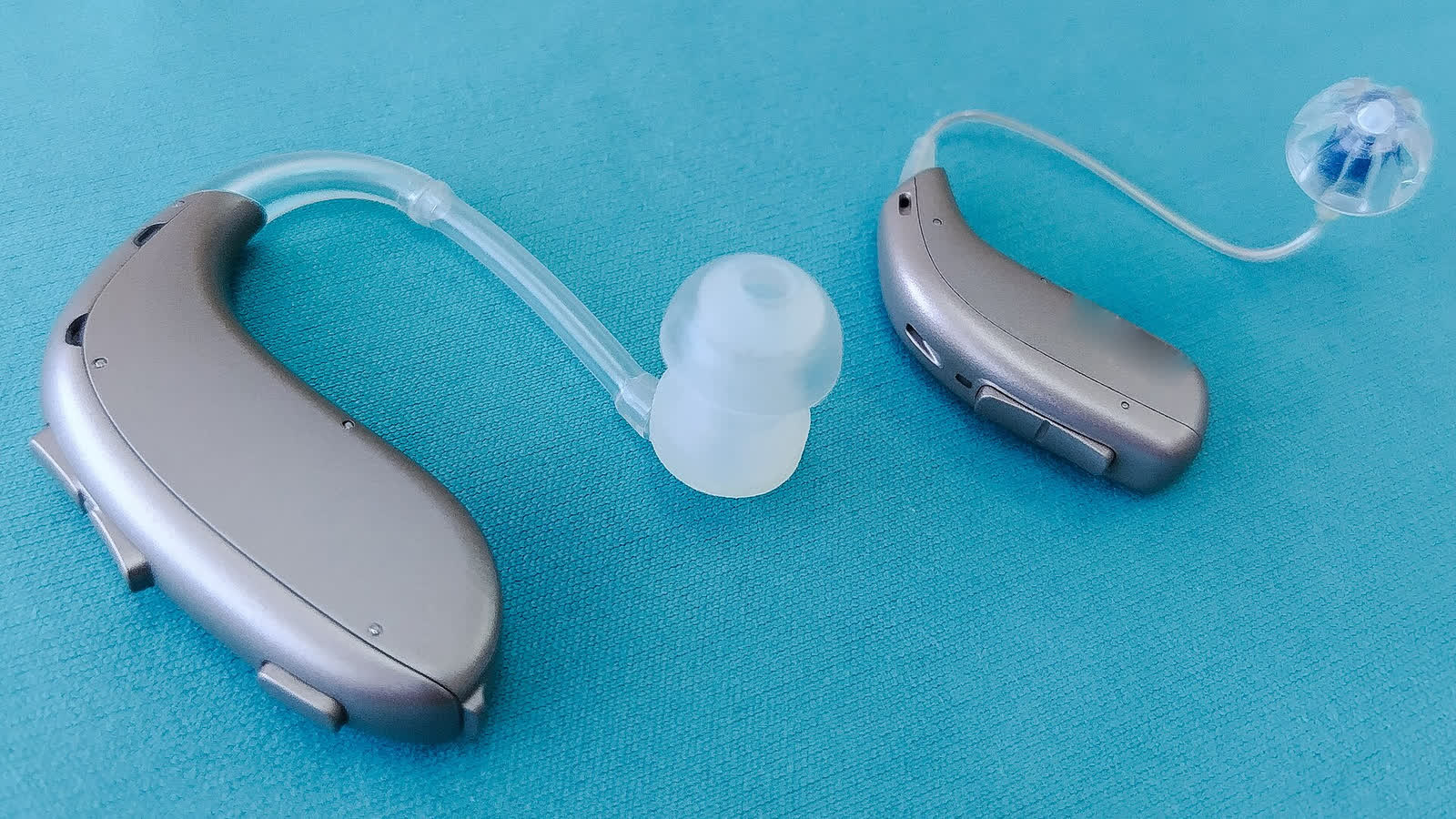
A Kentucky state brochure on going to the hospital with hearing loss, produced with Hearing Loss Association of America chapters, suggests a hearing-loss ID card with communication tips, a medical ID bracelet showing hearing loss, and keeping hearing aids in for as long as possible. So bring the aids, even if your parent has been leaving them in a drawer.
In the hospital: the right to communicate
The Justice Department's guidance on hospital communication says hospitals must provide effective means of communication for patients, family members and visitors who are deaf or hard of hearing, from the ER to inpatient care, and can't charge extra for interpreters or communication aids. Section 1557 of the Affordable Care Act adds a similar rule for health programs that receive federal financial assistance from the Department of Health and Human Services, along with a few other covered entities: 45 CFR 92.202 requires appropriate auxiliary aids and services where necessary, free of charge and in a timely manner, and it covers companions with disabilities too.
The guidance says written notes will likely do for brief, simple exchanges. For symptoms, a diagnosis or treatment options, a qualified interpreter may be necessary. Not everyone with hearing loss signs, and the ADA's list of auxiliary aids also includes real-time captioning, written materials and assistive listening devices.
Three things few families know:
- You shouldn't be the interpreter. The hospital guidance calls it inappropriate to ask family members to interpret, since emotion can get in the way of accuracy. Stay close, but don't be the only channel for a consent talk.
- It covers companions. If the parent with hearing loss is the spouse at the bedside, the hospital owes them effective communication too.
- Patient rooms may not flash. The guidance says visual alarms aren't required in patient rooms, though evacuation procedures should account for patients who are deaf or hard of hearing. Ask the nurse how your parent would be alerted to a fire alarm at night.
What to ask for and bring
Adapted from the Kentucky brochure:
- Tell the doctor, surgeon and anesthesiologist about the hearing loss, specifically.
- Ask that the chart show the hearing loss prominently, with what helps.
- Ask staff to give instructions before putting on surgical masks.
- Ask for a personal amplifier, TV captions and an amplified phone.
- Bring a small dry-erase board, or a pen and pad.
- Tell the ER desk your parent may not hear their name called.
A personal amplifier, as NIDCD describes it, is about the size of a cell phone, raises sound and cuts background noise, and your parent listens through earbuds or a headset, with or without hearing aids.
Then tape a card to the bed rail with NIA's tips for talking with someone who has hearing loss: face the person, stand in good light, speak a little louder than normal without shouting, don't hide your mouth, and repeat using different words. Shifts change, and the new nurse won't know.
Hearing aid care during a stay
Hospital rooms are hard on hearing aids: meal trays, bed sheets, napkins. Our guide to keeping hearing aids, glasses and dentures safe in the hospital covers labels, photos and what to do if one goes missing.
NIDCD's hearing aid page says to keep aids away from heat and moisture and replace dead batteries immediately. In the hospital:
- Bring spare batteries (the size is printed on the package) or, for rechargeable aids, the charger, and find an outlet the bed can reach.
- Ask about the policy for removing aids during procedures. The Kentucky brochure suggests asking that removed aids go in a plastic bag attached to the gown or chart.
- Keep the labeled case on the bedside table, never on the tray.
NIA notes that some medicines can damage the inner ear. If your parent's hearing seems worse on a new medicine, tell the doctor or nurse right away, and don't stop or change it on your own.
When the hearing loss is the emergency
NIDCD describes sudden sensorineural hearing loss as an unexplained, rapid loss of hearing, all at once or over a few days, that frequently affects only one ear. People often notice it on waking or when they use the phone on that side. Some hear a loud "pop" first; some feel ear fullness, dizziness or ringing.
People tend to blame allergies, a sinus infection or earwax and wait. NIDCD says to consider sudden deafness symptoms a medical emergency and visit a doctor immediately, and that treatment delayed more than two to four weeks is less likely to reverse or reduce permanent hearing loss.
Give your parent a rule: "If you wake up and can't hear out of one ear, call your doctor right away, then call me." Put the ear, nose and throat doctor's number in the binder.
The hearing page in your parent's binder
What a paramedic, nurse or visiting sibling needs, on one page. Update it after each hearing test.
| What to record | Example |
|---|---|
| Hearing level, in the audiologist's words | "Moderate to severe loss, both ears" |
| Better ear | "Left. Sit on her left." |
| Devices | Hearing aids, both ears; or cochlear implant, right |
| Power | Battery size, or "rechargeable, charger in nightstand" |
| Where spares and the case live | "Top drawer, bathroom" |
| Preferred communication | Face her, speak slowly; reads lips; write it down; sign language |
| Phone setup | Captioned phone, relay, TTY |
| Text to 911 | Available in their county? Who you asked, and when |
| Home alarms | Strobe or shaker, which rooms, last test date |
| Audiologist and ENT | Names and phone numbers |
| Serial numbers | From the paperwork, in case of loss |
Pack it with the ER essentials; it stays useful through the whole hospital stay.
Frequently asked questions
Can a person with hearing loss text 911?
In many areas, yes, but not everywhere. Ask your parent's local dispatch center ahead of time.
What smoke alarm works for someone who can't hear?
NFPA's tip sheet lists strobe lights, a loud low-pitched alert, and a pillow or bed shaker.
Does a hospital have to provide an interpreter?
Under the ADA, hospitals must provide effective communication at no extra charge. For big conversations like a diagnosis, that may mean a qualified interpreter, captioning or a listening device.
Is sudden hearing loss an emergency?
Yes. NIDCD says to treat it as a medical emergency and see a doctor immediately, and that treatment delayed more than two to four weeks is less likely to help.
Doing it yourself, or handing it off
You can build all of this yourself with the table above and an afternoon of phone calls. If you'd rather answer questions than design pages, Emergency Binder Now takes about 25 minutes of guided questions and turns your answers into a printable binder, including a one-page Emergency Information Sheet for paramedics and the ER. You can see a sample binder first.
This article is general information, not medical or legal advice. If your parent loses hearing suddenly, contact their doctor right away. Questions about hearing, devices or medicines belong with their doctor, audiologist or pharmacist.
This guide is general information to help families get organized. It isn't legal, medical or financial advice; for decisions about your parent, talk with their doctor, pharmacist or an attorney in their state.