Winter Storm Plan for an Elderly Parent Living Alone
By the Emergency Binder Now team · Updated · 11 min read
In this guide
- Watch, warning, advisory: what each means for your parent
- The days-before checklist
- The heat plan if the furnace stops
- Carbon monoxide: the storm-week risks
- Space heaters during a storm
- If the heat fails: where to go
- Ice, snow and who shovels
- Can an ambulance get to the door?
- The check-in schedule
- The winter storm page for the binder
- Frequently asked questions
- Before the next forecast
A winter storm plan for an elderly parent living alone covers four things: what gets done in the days before (medicines refilled, food and water in, flashlights out, phone charged, a backup heat plan), how the house stays warm without a carbon monoxide risk, who clears the snow and ice so neither your parent nor an ambulance gets stuck, and a check-in schedule with a rule for when they don't answer. Write it on one page before the first forecast.
This guide is about the storm itself. Hypothermia signs and the full space heater checklist are in the cold weather section of our heat wave safety plan; oxygen and CPAP backups are in the power outage plan for medical equipment; falls, keys and alert devices are in the emergency plan for a parent living alone.
Watch, warning, advisory: what each means for your parent
National Weather Service alerts use local criteria, so a Winter Storm Warning takes far less snow in the Southeast than in the Northern Plains.
| Alert | What it means | What you do |
|---|---|---|
| Winter Storm Watch | Conditions favorable for a significant storm, usually 12 to 48 hours out | Run the days-before checklist. Refill medicines today |
| Winter Storm Warning | Significant snow, ice or sleet; travel difficult or impossible in some situations; usually 12 to 24 hours out | Supplies should already be in. Start the check-ins |
| Ice Storm Warning | Usually about 1/4 inch of ice or more, likely to snap power lines | Assume the power goes out. Confirm where they'd go |
| Winter Weather Advisory | Wintry weather below warning level | No trips to the mailbox until the steps are treated |
Definitions are from the NWS and hour ranges from Ready.gov's winter weather page; the Red Cross puts a watch at 36 to 48 hours out. The last column is our suggestion. A watch is your shopping window; by the warning, the roads may already be bad.
Get alerts for their address: Ready.gov's older adults page notes the FEMA app covers up to five locations.
The days-before checklist
The Red Cross winter storm guide says to gather food, water and medicine beforehand, because stores might close. When a watch goes up:
- Medicines refilled early. The Red Cross suggests a one-month supply of needed medicines and supplies. Call the pharmacy the day of the watch and ask about an early fill or delivery.
- Food that needs no cooking. The NWS before-the-storm list suggests dried fruit, nuts and granola bars. Add a manual can opener.
- Water: at least one gallon per person per day, per the Red Cross.
- Flashlights, not candles. The Red Cross says to avoid candles because of the fire risk and use battery-powered lights and flashlights. One by the bed, one by the chair, one in the bathroom, with spare batteries.
- Phone charged, plus a backup battery, and a battery-powered radio (Red Cross).
- Heating fuel topped up. For oil or propane, the NWS says refuel before you're empty, because fuel carriers may not reach you for days after a storm.
- Pipes protected. The CDC's during and after a storm page says to let taps drip and open the cabinets under the sinks.
- CO alarm working, and its outside vent clear (NWS).
- Shovel and ice melt inside the house, not in a shed behind a drift.
The National Institute on Aging's cold weather page also suggests staying in when the weather is bad and having prescriptions and groceries delivered. The parent who likes to "run out for milk" can be told the milk is coming to her. Check that the medication list is current, too.
The heat plan if the furnace stops
What heats the house, and does it need electricity to run? Ask the technician at the next tune-up and write down the answer.
The CDC says to have at least one backup heat source for an outage: extra blankets, sleeping bags and warm coats; a fireplace that's up to code with dry firewood, or a gas log fireplace; or portable space heaters or kerosene heaters, after checking with the fire department that kerosene heaters are legal locally. Its storm preparation page adds a yearly chimney inspection for a fireplace or wood stove, and an easy-to-read indoor thermometer for older adults, since the ability to feel temperature changes decreases with age.
When the heat is out, the CDC and NWS suggest closing off unneeded rooms, stuffing towels under doors and closing curtains. Pick one room near a bathroom and move the chair, blankets, flashlight and charger there. The CDC adds warm, sweet drinks or broth, not alcohol or caffeine. And it says, plainly, that turning on the stove for heat is not safe.
Carbon monoxide: the storm-week risks
The CDC's CO basics page says more than 400 Americans die each year from unintentional CO poisoning not linked to fires, more than 14,000 are hospitalized, and older adults are more likely to get sick from it. The Consumer Product Safety Commission's carbon monoxide page adds that one portable generator can produce as much CO as hundreds of cars.
| Source | The rule | Who says so |
|---|---|---|
| Portable generator | Never in the home or garage, even with doors and windows open. Outside, more than 20 feet from windows, doors and vents, exhaust pointed away | CDC, CPSC |
| Gas stove or oven | Never for heating the house | CDC, Ready.gov |
| Grill or camp stove | Outdoors only, away from windows | Ready.gov, Red Cross |
| Car in an attached garage | Never run it there, even with the door open. Start it and pull it out right away; keep the tailpipe clear of snow | CDC, NFPA |
| Furnace, dryer, stove and fireplace vents | Clear them of snow during and after the storm | NFPA |
| Upstairs gas furnace venting through the roof | May need to be turned off until the roof snow melts | NWS |
Families tend to miss the vents. The NWS's during-a-storm page says to check that a gas furnace isn't blocked by a snowdrift as soon as it's safe to go out, so make vents part of the shoveling job.
The National Fire Protection Association's CO page recommends alarms outside each sleeping area and on every level, ideally interconnected. It also suggests asking the fire department's non-emergency line what number to call if the alarm sounds.
The CPSC lists CO symptoms as headache, dizziness, weakness, nausea, vomiting, sleepiness and confusion, and says to get outside to fresh air immediately, then call 911. "I've got a headache and I'm so tired" from a parent next to a heater deserves that response.
Space heaters during a storm
The CDC's storm guidance: an electric heater with automatic shut-off and non-glowing elements, at least 3 feet from drapes, furniture and bedding, never covered, never on furniture or near water, avoid extension cords, no cord under rugs, and nothing with a damaged cord or sparks. The NFPA's heating safety tip sheet adds: turn portable heaters off when leaving the room or going to bed.
The NFPA's heating safety page says 46% of home heating equipment fires happened December through February, based on 2020 to 2024 averages. And an electric space heater does nothing in a power outage, so it can't be the whole backup plan.
The CDC also says the cord shouldn't be a tripping hazard, so check it against the nighttime path to the bathroom. If falls are already a worry, see our piece on an elderly parent who keeps falling.
If the heat fails: where to go
NIA's advice for an outage without heat is to stay with a relative or friend. The Red Cross says to know in advance where you'll go if the house gets too cold: a friend's house, a public library or a warming center.
Set the trigger now. NIA suggests keeping the heat at 68°F or higher and warns that even mildly cool homes of 60 to 65°F can lead to hypothermia in older adults. A workable family rule (ours, not NIA's): if the indoor thermometer drops to 65°F and the heat isn't coming back soon, your parent moves. Going early is better, while roads are open.
In many areas, calling 2-1-1 can point you to warming centers. Indiana, for example, uses its state 211 service for warming center locations and hours. Services vary, so also check with the county emergency management office where your parent lives. Before the season, find out:
- Where the nearest warming site is, and whether it opens only in a declared cold emergency
- Whether it works for a walker or wheelchair, and whether your parent can stay overnight
- Who drives, and who backs up the driver
Call 511 for road conditions before driving (NWS). Confusion, drowsiness and slurred speech are among Ready.gov's hypothermia signs, and it says a body temperature below 95°F is an emergency. If you hear those signs, call 911.
Ice, snow and who shovels
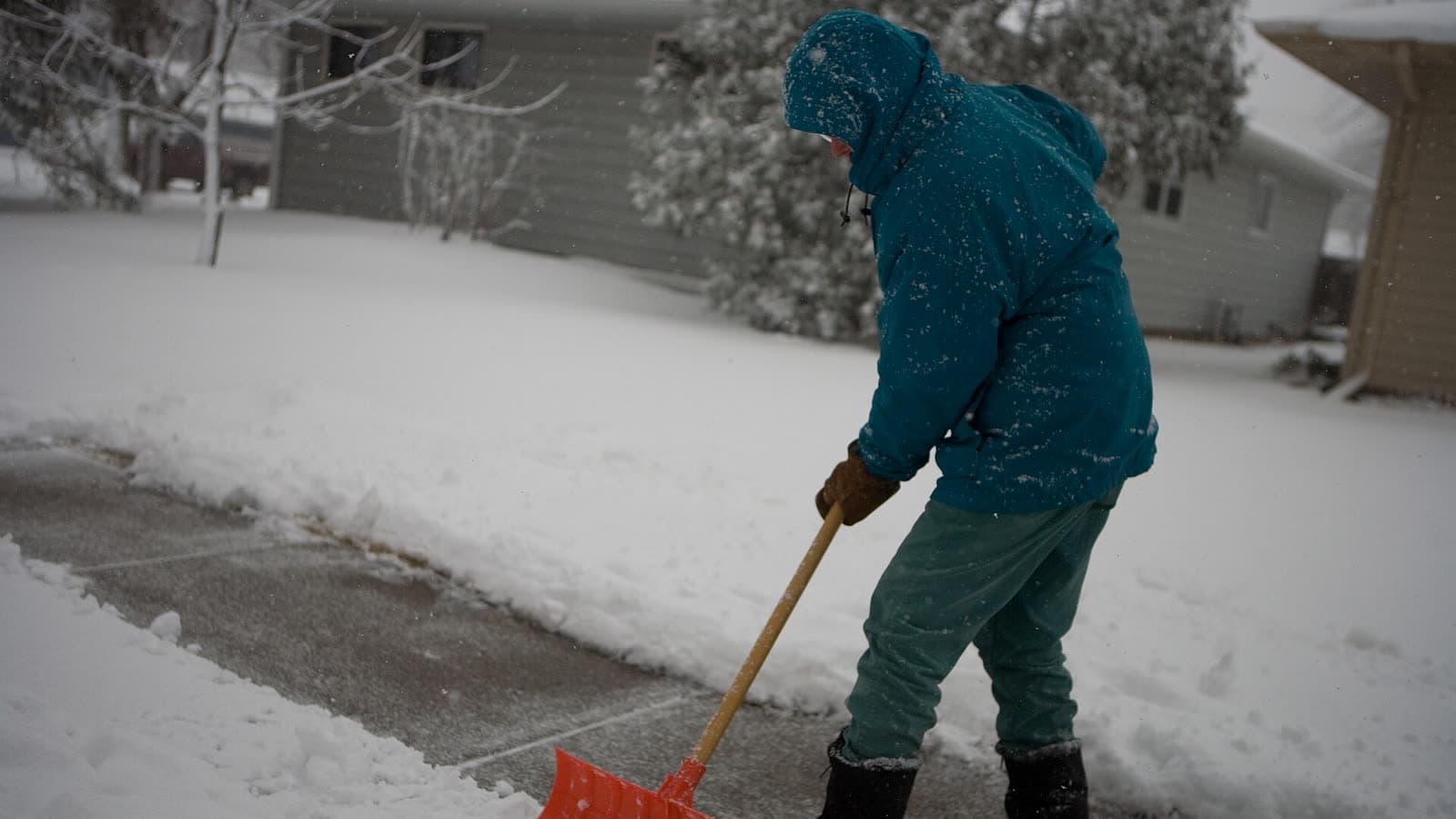
NIA says older adults should avoid shoveling snow when possible, because of the risk of falling and of heart attack. The CDC says people with heart disease or high blood pressure should follow their doctor's advice about shoveling, and that many cold-weather injuries come from falls on icy sidewalks, steps, driveways and porches. NIA suggests ice melt or sand, railings on icy stairs, and nonskid, rubber-soled, low-heeled shoes.
So each job needs a name, decided in November:
| Job | When | Who |
|---|---|---|
| Steps and path to the door | During long storms and right after | Neighbor, relative or hired help |
| Driveway or plowing | Before anyone needs to drive | Plow service or neighbor |
| Ice melt on steps, mailbox and trash path | Each icy morning | Same person, or a bucket by the door |
| Furnace, dryer and other vents | During and after | Whoever shovels |
| House number and mailbox dug out | After the plows pass | Whoever shovels |
If no one is nearby, the Eldercare Locator (800-677-1116, listed by NIA) can point you to local services. Then tell your parent the shoveling is handled, or they may be out there at 7 a.m. anyway.
Can an ambulance get to the door?
The Red Cross notes that emergency services may be delayed in a winter storm. You can't fix the roads, but you can fix the house.
- The house number. Near the front door, under a light, with any roadside sign visible from both directions and above the snow banks. That's typical local advice, from the Town of Wawayanda, New York, on house numbers to the West Klickitat fire district in Washington on address signs.
- A wide, clear path. Our suggestion: shovel one wide enough for a stretcher to the door responders will likely use, usually the front door.
- A way in if your parent can't reach the door: a key holder nearby, or a fire department lockbox program where offered.
Inside, a one-page emergency information sheet for paramedics on the fridge tells them what they need.
The check-in schedule
The CDC says to check on older adults often in extreme cold to make sure their homes are heated properly. Ready.gov adds that at least one person in your parent's support network should have a spare key and know where the supplies are.
Here's a schedule we suggest:
| When | What to ask |
|---|---|
| Day of the watch | Medicines picked up? Food, water, flashlights, phone charged? |
| Each storm morning | What does the thermometer say? Is the heat on? What are you using for heat? |
| Each storm evening | Power on? Any headache, dizziness or sleepiness? Heater off for the night? |
| Morning after | Steps and vents cleared? Stay in until someone puts down ice melt |
"What does the thermometer say?" gets you a number. "Are you warm enough?" gets you "I'm fine."
When they don't answer
Decide the rule ahead, since the usual backup may be snowed in too: no answer to a call, a second call and a text, and the nearest person who can safely walk over goes to the door. If nobody can, call the police or sheriff's non-emergency line for your parent's town or county and ask for a welfare check. As one local example, the City of Elkins, West Virginia, lists what to have ready: full name, exact address, why you're calling, last contact, your relationship, known medical conditions and your contact information. Put that number on the emergency contact list now.
If the last thing your parent said was that they felt dizzy or sick with a heater or generator running, don't wait. Call 911.
The winter storm page for the binder
One sheet, kept in the house and on the check-in person's phone:
- What heats the house, whether it needs electricity, and the heating company's number
- Fuel supplier and account number, for oil, propane or wood
- Utility outage numbers
- CO alarm locations and test dates, and the number to call if one sounds
- The shoveling table, with phone numbers
- The thermometer rule, where your parent goes and who drives
- The key holder, closest neighbor and local non-emergency police number
- The current medication list and pharmacy number
From another state? Our long-distance caregiving checklist covers lining up local helpers.
Frequently asked questions
How do you keep an elderly person warm in a winter storm without power?
Use one room, block drafts, and layer clothes and blankets (CDC, NWS). Never heat with a gas stove or oven, or run a generator or grill indoors. If the house drops to 65°F and the heat isn't coming back soon, move them somewhere warm.
Should an elderly person shovel snow?
NIA advises older adults to avoid it when possible because of falls and heart attack risk. Line up someone else before the first storm.
What is the difference between a winter storm watch and a warning?
A watch means a significant storm is possible, usually 12 to 48 hours out (Ready.gov). A warning means it's coming or here and travel may become difficult or impossible.
Before the next forecast
Most of this plan is a handful of phone calls you can make yourself. Or Emergency Binder Now can save you the typing: about 25 minutes of guided questions becomes a printable binder with your parent's medicines, doctors, contacts and home details, a one-page sheet for paramedics or the ER, and a list of what's still missing. Take a look at a sample binder first.
General information, not medical advice. Heating equipment, fuel rules and local services vary, so follow manufacturer instructions, confirm details locally, and ask your parent's doctor or pharmacist about anything medical. In an emergency, call 911.
This guide is general information to help families get organized. It isn't legal, medical or financial advice; for decisions about your parent, talk with their doctor, pharmacist or an attorney in their state.